A Witch’s Guide to Welcoming A Magickal October: Simple New Month Rituals

Magickal Rituals to help bring in a new month. Its October 1st – the countdown to Halloween has begun!

Its October 1st – We are now officially in Spooky Season and the countdown to Halloween has begun! As the calendar turns from September to October, there’s a palpable shift in the air. The light slants differently, the wind carries a new crispness, and the world begins to hum with a spooky, magickal energy. For witches and magickal folk, this isn’t just a date change; it’s a potent threshold. Pass us the Halloween decorations, we’re going in.

A new month is a blank page in your grimoire, a chance to set powerful intentions and align your energy with the themes of the season. This October, don’t just let the month happen to you. Conjure it with purpose.

Here is your simple guide to welcoming October with witchcraft, from a beloved prosperity ritual to other ways to set your magickal tone.

Cinnamon” by Kjokkenutstyr.net 

The Cinnamon Abundance Ritual: A Sweet Start to October

Perhaps the most popular and joyful new-month ritual sweeping through the witchy community is the act of blowing cinnamon into your home. This simple practice is a powerful piece of sympathetic magic, rooted in the intention of drawing abundance—in all its forms—across your threshold.

Why Cinnamon?
Cinnamon has been prized for centuries not just for its flavor, but for its potent magical properties. It’s associated with:

  • Prosperity & Abundance: Its warm, stimulating energy is believed to attract wealth and success.
  • Protection: The strong scent is said to create a protective barrier against negative influences.
  • Spiritual Power: It raises vibrational energy, making it perfect for amplifying your intentions and spiritual work.

How to Perform the Cinnamon Ritual:

Cinnamon on coffee with autumn table decorations
  1. Gather Your Supplies: All you need is about a tablespoon of ground cinnamon. Ceylon cinnamon is ideal, but any cinnamon from your kitchen spice rack will work beautifully.
  2. Set Your Intention: Before you begin, hold the cinnamon in your hand. Close your eyes and focus on what “abundance” means for you this October. Is it financial prosperity? An abundance of joy, creativity, or peace? Be specific in your mind.
  3. Blow in the Blessings: Stand outside your open front door, facing inward. Place the cinnamon in the palm of your hand. Take a deep breath, focusing on your intention, and gently blow the cinnamon from your hand, across the threshold and into your home. As you do, you can say a simple affirmation aloud, such as:With this cinnamon, I blow in prosperity and joy. Welcome, October. My home is a magnet for abundance.
  4. Let it Settle: Do not sweep or vacuum the cinnamon for at least 24 hours. This allows the energy to settle and permeate your home, giving the magic time to work. After that, you can clean it normally, visualising any residual stagnant energy being swept away with it.
Woman walking through tress hol
ding leaves basking in the autumn sunshine

Autumn Sun” by be creator 

Beyond Cinnamon: Crafting Your October Energy

While the cinnamon ritual is a fantastic foundation, you can build a more personalised monthly practice around it. Here are a few other ways to welcome October’s unique magic.

Energetic Cleansing: Sweep Away the Old
Before you can fill a cup, it must be empty. Start your month by cleansing your physical and energetic space of any lingering September energy.

  • Open a Window: Even for just a minute. Let the stale air of the past month out and invite the crisp, new energy of October in. Shouting and commanding bad spirits out of the house is another fun way to get the house vibes up.
  • Smoke Cleansing: Pass a bundle of rosemary, cedar, or sage around your front door, windowsill, and yourself to clear stagnant energy. As you do, state, “I release all that no longer serves me. My space is clear and receptive.” or whatever intents feel right to you.
  • Sound Bath: Ring a bell, chime, or sing a note in each corner of your main rooms. Sound is a powerful vibratory tool for breaking up dense energy. Yes, banging a saucepan does actually count.
Smoke cleanse happening in a room with garden sage

2. Set the Tone: Candle Magic for Your Intentions
What do you want to manifest this October? A candle spell can set the tone.

  • Take a candle (a tea light or a small chime candle is perfect). Anoint it with a drop of olive or sunflower oil, moving from the wick outward to draw energy in, or from the base to the wick to release energy.
  • As you do, speak your intention for October. Is it protection for the spooky season? Introspection for your shadow work? Joy for the Halloween festivities? Press that intention into the wax.
  • Light the candle and let it burn safely while you meditate, write in your journal, or simply enjoy a moment of quiet. Visualize your month unfolding as you desire.
Candle magic with lavender and camomile

3. Divination for the Month Ahead: Consult the Cards
Ask your tarot or oracle deck for guidance. A simple three-card pull can offer profound insight:

  • Card 1: The Energy of September’s End. What are you carrying over?
  • Card 2: The Core Theme of October. What is the central lesson or focus?
  • Card 3: Advice for Navigating the Month. How can you best work with this energy?
    Journal the message and keep the cards on your altar or desk as a guide you can revisit all month long.
Scents of Salem candle with tarot cards and herbs

4. Create an October Grimoire Page
Dedicate a page in your Book of Shadows or journal to this powerful month.

  • Write the word “OCTOBER” in a beautiful script.
  • Note the astrological events (New Moon, Full Hunter’s Moon).
  • Circle Samhain on October 31st.
  • Jot down your cinnamon ritual intention, your tarot pull, and any goals or spells you want to work on.
    This act physically and magically dedicates space for the month’s magic, making you an active participant in its creation.
A witches grimore and tarot deck are open on a table

Weaving Your Monthly Tapestry

You don’t need to do all of these things. Even one small, focused act—like blowing cinnamon across your threshold—is enough to mark the transition with magic and purpose. By taking just 15-30 minutes for this practice, you move from passively watching the calendar turn to actively weaving the tapestry of your month.

How will you be welcoming October? Share your favorite new-month rituals in the comments below!

Want More Witchy Wonders?

Digital Coven Founder Emma Carney looking Witchy holding tarot cards and wearing a black witchy hat

 Book a tarot reading or workshop with Me, Emma, just email  emma@emfluence.co.uk and we can go from there (my actual Witchcraft Shop is launching over at Witchytype.com soon).


Follow the magic on social: @Bunnypudding (Tiktok) / @Witchytypebookclub (Tiktok) / @Bunnyscopes (Instagram) / Link Tree / Digital Coven Facebook 

Blessed Samhain, Coven, until next time, all the love  Ems x X

P.S. Loved this post? Share it with a fellow Witchy Type! Tag us or drop a comment—We adore hearing from you. 

Featured images: “Halloween decorations.” by MIKI Yoshihito. (#mikiyoshihito)

What is The Autumn Equinox / Mabon

Learn all about the Autumn Equinox also called Mabon in some witch practices, in todays post by UK Witch and Tarot reader AJ

The wheel of the year continues to turn and it’s time for another feast day. The Autumn Equinox is here, to some practices, called Mabon (Mah-bon), after Welsh God Mabon, son of Earth Mother Goddess, Modron (who actually has nothing to do with the equinox…)

When is the Autumn Equinox / Mabon?

The Autumn Equinox almost always falls on either the 22nd or 23rd September (although in rare cases the window is from 21st September – 24th September at 02:03am BST.

In 2025, the Autumn Equinox is Monday 22nd September.

What is the Autumn Equinox?

The Autumn Equinox marks the end of summer and the beginning of Autumn, on this date, day and night are of equal length before the longer nights and shorter days start creeping in. Everything is at that perfect balance but also on the cusp of change.

What is Mabon?

Mabon is a feast in reconstructed paganism and the Wiccan faith, it only really started becoming labelled as Mabon around the 1970s but for many, the name kind of stuck.

Mabon is not only become the feast of the Autumm Equinox but also the Second Harvest, the Harvest of fruit and around the ‘harvest festival’ which some of you may remember from school. The Harvest Festival is traditionally celebrated on the Sunday nearest the harvest moon, the full moon nearest the Autumn Equinox.

It’s a time to reflect and celebrate on the year so far with the ‘reaping what you have sown’ mentality and seeing all of the benefits of your hard work so far.

For me, the most important part is the resting side. As the days grow darker and the nights grow longer, we are supposed to rest. After the feast and celebrating is done, we are supposed to retreat, use less energy and get through the winter. Like we used to before *capitalism*.

How can I celebrate the Equinox / Mabon?

Whether it’s making blackberry jam with your own little fruit harvest or just embracing the autumn aesthetic and adding some colour magic to your wardrobe, here are a bunch of things you can do to celebrate the equinox and Mabon, some low energy and some more intense:

  • Dress in Mabon colours: just as the leaves have changed, embrace earthy colours to match. Browns, deep reds, golds and dark greens
  • Eat Seasonal Food: I love to make a stew using squashes (like pumpkin) from the local organic green grocer. Hopefully next year I’ll be able to grow my own! if that’s a little too much, an apple pie from McDonald’s is also valid.
  • Go Blackberry picking: Get your own little harvest, you can use these to make blackberry jam, pies and syrups or even just eat them with sugar and be thankful for the bounty. This is generally the last time the berries are still good.
  • Hold a thanksgiving ritual: Write a letter to the universe of everything you’re thankful for this year so far. You can make it proper witchy by burning the list on the day of the Equinox and releasing that thankful energy into the universe
  • Light a candle: With the nights growing longer we’ll need to bring more light in, I use yellow / gold candles to symbolise that the sun will return.
  • Wind down and get comfy: This is the time when we’re supposed to rest and hibernate so do not feel guilty about grabbing a blanket and settling in with a cup of tea and a good book. It’s what we’re supposed to be doing and it’s a ritual in itself.

How will you celebrate the equinox this year?

The History and Celebration of Lughnasadh and Lammas : Embracing the First Harvest Festival

Today is the first harvest festival of the year. Today we delve into the the History and Celebration of Lughnasadh and Lammas.

It’s August 1st darlings, which can mean only one thing – It’s time to Celebrate Lughnasadh! Who doesn’t like giving thanks and having a wee party, eh? Lughnasadh, also known Lammas in some areas of the UK, is a significant festival in the Wheel of the Year, marking the beginning of the Harvest season. Celebrated on August 1st, Lughnasadh is a time to give thanks for the first fruits of the earth and to honor the Celtic god Lugh. This ancient festival, rich in history and tradition, is a vibrant blend of pagan, Christian, and agricultural elements – Who doesn’t love a bit of diversity at a party, am I right?

The Historical Roots of Lammas

Pagan Origins

The term “Lammas” is derived from the Old English/ Anglo Saxon word “hlafmaesse,” meaning “loaf mass.” It was traditionally the time when the first grain harvest was celebrated, and loaves of bread were baked from the new wheat crop. These loaves were then used in rituals and as offerings. Who doesn’t love an excuse to eat cards, eh? 

Lammas corresponds with the Celtic festival of Lughnasadh, named after the god Lugh. Lugh was a god of light, skill, and craftsmanship, celebrated in many myths for his talents and leadership. Lughnasadh was a time for feasting, games, and community gatherings, reflecting the communal effort required for the harvest. Check out my other posts on Lughnasadh and Lammas – What’s the Difference?  And my post The Celtic Celebration of Lammas and the God Lugh for more info on these. (I know, I know, it’s an actual harvest of content today, isn’t it? You’re most welcome, coven) 

How It Inspired The Christian Tradition 

With the advent of Christianity, Lammas and Lughnasadh became ‘integrated’ into the Christian calendar. It evolved into a thanksgiving for the first fruits, and loaves of bread were blessed in churches. This blending of traditions illustrates the adaptability of early Christian practices to local customs and agricultural cycles. 

Two men from the British Isles harvest wheat / Deux hommes des îles Britanniques récoltent du blé” by BiblioArchives / LibraryArchives is licensed under CC BY 2.0.

Agricultural Significance

Lughnasadh / Lammas is deeply rooted in agricultural traditions. It marks the time when the hard work of planting and tending crops begins to bear fruit. The first grains of the year are harvested, a crucial milestone for agrarian societies. This celebration of abundance is also a reminder of the need for continued hard work to ensure a bountiful harvest in the coming months.

Celebrating Lughnasadh and Lammas Today

Modern celebrations of Lughnasadh / Lammas can vary widely, reflecting its diverse origins and the personal beliefs of those who observe it. Here are some common ways to celebrate this festival, both traditionally and in contemporary settings.

Rituals and Practices

  1. Bread Baking and Offering
    Baking bread is one of the most traditional ways to celebrate Lammas. The act of baking symbolizes transformation and the cycle of life, as the harvested grain is turned into sustenance. Here is a simple ritual to try:


Materials Needed:

  • Flour, yeast, water, salt, and any other bread ingredients you prefer.
  • A loaf pan or baking sheet.
  • Candles for your altar.
  1. Instructions:
  • Set up a small altar with candles, representing the light and warmth of the harvest.
  • As you mix the ingredients, focus on your intentions for the bread. Consider what you are grateful for and what you wish to manifest.
  • While kneading the dough, chant or sing to imbue the bread with positive energy.
  • Once baked, place the bread on the altar and offer thanks to the earth for its bounty. You can share the bread with loved ones or use it in further rituals.

Harvest Moon” by Turku Gingerbread is licensed under CC BY 2.0.

  1. Harvest Feast
    Hosting a feast with friends and family is a joyous way to celebrate Lammas. Use seasonal fruits, vegetables, and grains to create a meal that honors the first harvest. Decorate your space with sheaves of wheat, sunflowers, and other symbols of abundance.
  1. Crafting Corn Dollies
    Corn dollies are traditional crafts made from the last sheaf of wheat harvested. These figures were believed to house the spirit of the grain and were kept until the next planting season to ensure a good crop. To make a corn dolly:
    Materials Needed:
  • Dried wheat stalks or corn husks.
  • String or ribbon.
  1. Instructions:
  • Soak the wheat stalks or corn husks in water to make them pliable.
  • Braid or weave the stalks into a figure, tying them with string or ribbon to hold the shape.
  • Place the corn dolly on your altar or hang it in your home as a symbol of prosperity and protection.

File:Contemporary male Corn dolly.jpg” by Mountainash333 is licensed under CC BY-SA 3.0.

I also like to make ‘Dollies’ out of flowers and grass, especially when I sat in a field doing my thanksgiving. Above is a very fancy Male Corn Dolly representing ‘The Harvest Father’ 

  1. Offering to the Land
    Making offerings to the land is a way to give thanks and honor the earth. You can offer a portion of your harvested fruits, vegetables, or baked goods to the land. Simply find a special place in nature and leave your offering with a prayer of gratitude.
  1. Reflection and Gratitude Ritual
    Lammas is a time for reflection and gratitude. Set aside time to meditate on the past year’s growth and challenges. Write down what you are thankful for and what you hope to achieve in the coming months. Burn the paper as an offering, symbolizing the release of your intentions into the universe.

Mabon Altar 2012” by Pearl Photo is marked with Public Domain Mark 1.0.

Incorporating Lughnasadh / Lammas into Modern Life

While the traditional practices of Lammas are deeply rooted in agrarian life, they can be adapted to suit modern lifestyles. Here are some ideas for incorporating Lammas into your life, regardless of your living situation:

  1. Urban Celebrations
    Even if you live in an urban environment, you can celebrate Lammas by visiting a local farmers’ market and purchasing seasonal produce. Support local agriculture by buying fresh fruits, vegetables, and bread. As a London Dweller myself, I always try to find some green space (believe it or not there is some in London!) and take some time to sit and pay gratitude, and if able do a few wee rituals. Also, growing herbs and other things in window boxes and on balconeys is another great way to get your green witchcraft hat on!
  1. Gardening and Planting
    If you have a garden, use Lammas as a time to tend to your plants and reflect on the cycle of growth. Planting herbs or flowers that thrive in late summer can be a symbolic act of honoring the earth. If you are low energy, then just sitting in your garden or green space having a coffee can be just as sacred.
  1. Community Involvement
    Lammas is about community and sharing. Volunteer at a local food bank or community garden to give back to your community. Sharing your time and resources is a modern way to embody the spirit of the first harvest. I also like to go and feed the local crows in my park, and pick up any rubbish as I do so. Little things we do can have a huge impact.
  1. Creative Expressions
    Engage in creative activities that celebrate the themes of Lammas. Paint, write poetry, or create music inspired by the season’s abundance and the myth of Lugh. Creative expression can be a powerful way to connect with the festival’s energy. I love to have a bit of a dance and sing song (rather badly I may add but it’s still bloody fun so why not?!)

Do you celebrate Lughnasadh or Lammas? If so let us know below or via our social channels as we love to hear from you and share our practices. 

Like this article? Why not sign up to our newsletter and or social channels? We love to hear from you! 

@Bunnypudding (Tiktok) / @Bunnyscopes (Instagram)

Ems xX

References

Profile Image: “File:A Contemporary Goddess of the corn . Corn Mother.JPG” by Rowan Duxbury is licensed under CC BY-SA 3.0

Hutton, Ronald. The Stations of the Sun: A History of the Ritual Year in Britain. Oxford University Press, 1996.

Pennick, Nigel. The Pagan Book of Days: A Guide to the Festivals, Traditions, and Sacred Days of the Year. Destiny Books, 1992.

Farrar, Janet and Stewart. Eight Sabbats for Witches. Robert Hale, 1981.

Grimm, Jacob. Teutonic Mythology. George Bell and Sons, 1883.

MacNeill, Máire. The Festival of Lughnasa: A Study of the Survival of the Celtic Festival of the Beginning of Harvest. Oxford University Press, 1962.

Lughnasadh and Lammas – What’s the Difference? A Very Concise History of the Celtic and Anglo Saxon Nations

We explain what the Celtic Nations are and what the difference between Lughnasadh and Lammas. Snazzy, eh?

Hello Coven, me again, what can I say, I am NEEDY for your love and most likely in the middle of a hyper fixation….You’re welcome! Anyhow, further to my earlier post on Lughnasadh and Lammas I wanted to share a post I wrote for an upcoming project I am working on (around Celtic Heritage….eiiii) about the variance between the two festivals. The British Isles has a fascinating history featuring a mix of cultures including Celtic, Anglo Saxon, Norse (Yip, they get around everywhere, bless ‘em),Norman and even blooming the fabulous cultures that the Roman army brought over, we certainly have a multi-cultural vibe going on. So I just wanted to add a bit more nuance to variance between the festivals historically. 

Firstly, what are the celtic nations? 

File:Map of Celtic Nations-flag shades.svg” by QuartierLatin1968 is licensed under CC BY-SA 3.0.

The Celtic Nations

The Celtic nations are regions in Western Europe where Celtic languages and cultural traditions have endured. There are six recognised Celtic nations:

  1. Ireland (Éire) [Green] Aka Emma’s Mother Land ❤
    • Language: Irish Gaelic (Gaeilge)
    • Highlights: Rich traditions in music, dance, and folklore. Historical sites like the Hill of Tara reflect its ancient Celtic roots.
  2. Scotland (Alba) [Blue] Aka Ajs Mother Land 
    • Language: Scottish Gaelic (Gàidhlig)
    • Highlights: Famous for wild haggis, bagpipes, kilts, and Highland games. The language is spoken in the Highlands and the Western Isles, with historical sites like the Callanish Stones. 
  3. Wales (Cymru) [Red] 
    • Language: Welsh (Cymraeg)
    • Highlights: Known for male voice choirs and the Eisteddfod festival. The beautiful Welsh language is NOW widely spoken and taught especially in the north and west but this is only recently but let’s talk about colonisation in another post…. 
  4. Brittany (Breizh) [Black] 
    • Language: Breton (Brezhoneg)
    • Highlights: Located in northwest France, it features traditional music and dance (fest-noz). The Breton language is spoken by a minority, with megalithic sites like Carnac.
  5. Cornwall (Kernow) [Yellow]
    • Language: Cornish (Kernewek)
    • Highlights: Situated in southwestern England, known for mining, fishing, and folklore. The language, like Welsh is experiencing a revival, with cultural sites like Tintagel Castle.
  6. Isle of Man (Mannin) [Mustard] 
    • Language: Manx Gaelic (Gaelg)
    • Highlights: The island has a unique Celtic and Norse heritage, with traditional music and the annual Tynwald Day ceremony. Manx Gaelic is being revived through education.

Other Regions with Celtic Influence

  • Galicia and Asturias (Spain): These regions have significant Celtic cultural elements, especially in music and dance.

And finally England [White]: 

Why England Isn’t a Celtic Nation (Explained Politely)

While certain regions of England, such as Cornwall, have Celtic roots, England as a whole is not considered a Celtic nation. This is due to the significant Anglo-Saxon and Norman influences that have shaped its cultural and linguistic identity, overshadowing the earlier Celtic heritage. The predominant language and cultural practices in England evolved separately from the distinct Celtic traditions maintained in the recognised Celtic nations.

Union of Nations Celtics

Combined flag of the Celtic nations” by BzhSamTheRipper is licensed under CC BY-SA 3.0.

Ok, phew – let’s get to the festival variances between the festival and a detailed comparison of the two:

Lughnasadh:

Origins and Etymology

  • Celtic Festival: Lughnasadh is rooted in ancient Celtic tradition. The name Lughnasadh (pronounced “Loo-nah-sah”) is derived from the god Lugh, a prominent deity in Celtic mythology, and “nasadh,” which means assembly.
  • Mythological Significance: Lughnasadh was established by Lugh to honor his foster mother, Tailtiu, who died from exhaustion after clearing the plains of Ireland for agriculture. It is a celebration of the harvest and a commemoration of Tailtiu’s sacrifice. Thanks Tailtiu!

Celebrations and Traditions

  • Feasting and Games: Central to Lughnasadh are communal feasts and athletic games, reflecting Lugh’s associations with skill and competition. These games included horse racing, wrestling, and various contests of strength and agility.
  • Religious Rituals: Offerings of the first fruits of the harvest were made to the gods, particularly to Lugh, to ensure continued fertility and abundance. Rituals often took place at sacred sites such as hilltops and stone circles.
  • Craftsmanship: As Lugh was a god of many talents, craftsmanship and artistic skills were celebrated. Exhibitions and competitions in various crafts were held, showcasing the community’s talents.
  • Fire Festivals: Bonfires were lit as part of the festivities, symbolising purification and the power of the sun. The Celts love a fire festival, and celebrate 4 year. Nice.

Cultural Context

  • Irish and Scottish Heritage: Lughnasadh is primarily celebrated in regions with strong Celtic heritage, such as Ireland and Scotland. It has deep roots in the agricultural calendar and the Celtic mythology of these areas.

Lúgh Láimh Fada == Lu of the Long Hands” by Liamfm . is licensed under CC BY-SA 2.0.

Lammas

Origins and Etymology

  • Anglo-Saxon Festival: Lammas, from the Old English “hlafmaesse,” translates to “loaf mass.” It was a Christian festival that marked the blessing of the first loaf of bread made from the new wheat crop.
  • Christian Integration: As Christianity spread through the British Isles, Lammas became integrated into the Christian liturgical calendar. It was a time to give thanks to God for the first fruits of the harvest and to bless the bread made from the new grain.

332 Lammas Festival” by Trinity Trees is licensed under CC BY-SA 2.0.

Celebrations and Traditions

  • Blessing of Bread: The primary ritual of Lammas involved baking a loaf of bread from the first harvested grain and taking it to church to be blessed. This act symbolized gratitude for the harvest and the provision of daily bread.
  • Feasting and Community Gatherings: Similar to Lughnasadh, Lammas involved communal feasting and sharing of the harvest’s bounty. It was a time for communities to come together and celebrate the season’s abundance.
  • Agricultural Customs: In addition to the religious aspects, Lammas was also marked by various agricultural customs, such as the reaping of the first wheat and the preparation of fields for the next planting season.

Cultural Context

  • Medieval and Early Modern England: Lammas was widely celebrated in medieval and early modern England. It reflects the integration of pagan harvest festivals into the Christian tradition, demonstrating the adaptability and syncretism of religious practices during this period.

Comparison and Modern Celebrations

Common Themes

  • Harvest Celebration: Both Lughnasadh and Lammas celebrate the beginning of the harvest season, giving thanks for the first fruits and acknowledging the hard work of the agricultural cycle.
  • Community and Feasting: Communal meals and gatherings are central to both festivals, fostering a sense of community and shared gratitude.

Barley-Harvest. [Suffolk.] Peter Henry Emerson” by J. Paul Getty Museum is marked with CC0 1.0.

Differences in Focus

  • Deity vs. Christian Context: Lughnasadh is specifically tied to the Celtic god Lugh and his mythological significance, whereas Lammas is a Christianized festival focusing on the blessing of bread and the harvest.
  • Cultural Origins: Lughnasadh has its roots in Celtic traditions and is primarily associated with Ireland and Scotland. Lammas, on the other hand, is an Anglo-Saxon festival that became integrated into Christian practices in England.

Modern Celebrations

  • Neo-Pagan Practices: Many modern Neo-Pagans celebrate Lughnasadh by incorporating traditional Celtic rituals, such as crafting corn dollies, baking bread, and holding feasts and games. These practices honor the historical roots and the god Lugh.
  • Wiccan Sabbats: In Wiccan tradition, both Lughnasadh and Lammas are celebrated as one of the eight Sabbats in the Wheel of the Year. Wiccans might blend elements of both traditions, focusing on harvest themes, gratitude, and community.
  • Mordern Witches: Many witches follow the wheel of the year but don’t have associations with any deities and in some cases are antheist but include elements of the celebrations in their practices (Again, hello fwends!)
  • Contemporary Christian Observance: Some Christian communities continue to observe Lammas with the blessing of bread and thanksgiving services, maintaining the festival’s historical Christian elements.

Harvest Altar” by allynfolksjr is licensed under CC BY 2.0.

So there you have it! While Lughnasadh and Lammas share common themes of harvest and gratitude, they originate from distinct cultural and religious traditions. Lughnasadh is deeply rooted in Celtic mythology and the veneration of the god Lugh, while Lammas has its origins in Anglo-Saxon Christian practices centered around the blessing of the first bread. Both festivals, however, offer rich traditions and practices that celebrate the abundance of the earth and the importance of community.

Like this article? Why not sign up to our newsletter and or social channels? We love to hear from you! 

@Bunnypudding (Tiktok) / @Bunnyscopes (Instagram)

Ems xX

References

Featured image: “The grass bends, the oak breaks (harvest series)” by Rising Damp is licensed under CC BY 2.0.

Hutton, Ronald. The Stations of the Sun: A History of the Ritual Year in Britain. Oxford University Press, 1996.

Pennick, Nigel. The Pagan Book of Days: A Guide to the Festivals, Traditions, and Sacred Days of the Year. Destiny Books, 1992.

Farrar, Janet and Stewart. Eight Sabbats for Witches. Robert Hale, 1981.

Grimm, Jacob. Teutonic Mythology. George Bell and Sons, 1883.

MacNeill, Máire. The Festival of Lughnasa: A Study of the Survival of the Celtic Festival of the Beginning of Harvest. Oxford University Press, 1962.

The Celtic Celebration of Lughnasadh and the God Lugh

Its all Live, Laugh, Lugh! in todays post as we explore The Celtic Celebration of Lughnasadh and it’s name sake, the God Lugh

Three times a charm today Coven! As a bit of a teaser for a project that I am working on, here is a little explainer into the Celtic God Lugh and Lughnasadh, any questions or queries please let me know…but let’s dive in shall we?

Lughnasadh holds a significant place in the Celtic tradition as one of the four major fire festivals, along with Imbolc, Beltane, and Samhain. Celebrated on August 1st, Lughnasadh marks the beginning of the harvest season and is named after the god Lugh, a prominent figure in Celtic mythology.

The Celtic Celebration of Lughnasadh

The ancient Celts had a deep connection to the cycles of nature, and their festivals reflected the agricultural rhythms of their lives. Lughnasadh was no exception and was celebrated with a variety of customs that honored the harvest, fostered community ties, and paid homage to Lugh.

Feasting and Games
Lughnasadh was a time of communal feasting, where people gathered to share the bounty of the first harvest. These feasts included freshly baked bread, seasonal fruits, and other agricultural products. Sharing food was a way to strengthen community bonds and express gratitude for the earth’s abundance.
Athletic games and competitions were also a central feature of Lughnasadh celebrations. These games, often held in honor of Lugh, included feats of strength, speed, and skill. Horse races, wrestling matches, and various other contests showcased the talents and vitality of the community. These activities were not only a form of entertainment but also a way to honor the physical prowess and competitive spirit that Lugh represented.

    Crafts and Handiwork
    Craftsmanship was another important aspect of Lughnasadh. People would display their handiwork, including weaving, metalwork, and other crafts. This emphasis on skill and creativity was a tribute to Lugh, who was renowned for his multifaceted talents. Competitions and exhibitions of crafts were common, allowing individuals to showcase their abilities and receive recognition from their peers.

    Callanish Stone Circle” by Travels with a dog and a Camera 🙂 is licensed under CC BY 2.0.

    Religious Ceremonies and Offerings
    Religious rituals were integral to the celebration of Lughnasadh. These ceremonies often took place at sacred sites such as hilltops, stone circles, and other natural landmarks. Offerings of the first fruits of the harvest, particularly grain, were made to the gods to ensure continued fertility and abundance. These offerings might include loaves of bread, freshly harvested grains, and other symbolic items.
    Bonfires were also lit during Lughnasadh, serving as a focal point for communal gatherings and rituals. Fire, a symbol of purification and transformation, played a crucial role in Celtic festivals. People might dance around the bonfires, leap over the flames for luck, and use the fire’s energy to bless their homes and fields.

    Cultural and Social Activities
    Lughnasadh was not only a religious and agricultural festival but also a cultural and social event. Storytelling, music, and dance were integral parts of the celebrations. Bards and poets would recite tales of heroes, gods, and the land, reinforcing the cultural heritage and values of the community. Music and dance brought people together, fostering a sense of unity and joy. Any excuse for a party, eh? Anyway whilst y’all here *Pulls out my poetry notes and clears throat* There was once a woman from Stoke, who got something caught…

      Lúgh Láimh Fada == Lu of the Long Hands” by Liamfm . is licensed under CC BY-SA 2.0.

      Lugh: The Multifaceted Celtic God

      Lugh, pronounced “Loo-g” and in is one of the most revered deities in Celtic mythology. Known by various epithets such as Lugh Lámhfhada (Lugh of the Long Arm) and Samildánach (Skilled in All Arts), Lugh’s character and deeds are central to the themes of Lughnasadh.

      Origins and Mythology
      Lugh is a member of the Tuatha Dé Danann, a race of supernatural beings in Irish mythology. His parentage is a mix of the divine and the mortal (Dude, same!) as he is the son of the god Cian and the Fomorian princess Ethniu. This union symbolises the bridging of different worlds and the integration of diverse qualities within Lugh.
      One of the most famous myths involving Lugh is his entry into the court of King Nuada at Tara. According to the story, Lugh approached the gates of Tara seeking entry, but the doorkeeper refused him, stating that only those with a special skill were allowed in. Lugh then listed his numerous skills, including warrior, poet, harpist, blacksmith, and physician, among others. When the doorkeeper was unable to find anyone who possessed all these skills, Lugh was admitted and became a prominent figure at Tara. Safe to say, I am taking the vibes of Lugh with me next time I try to get into a west London Club (I am joking, I’d rather eat my own head then go to West London club but you get what I mean)

        Attributes and Symbolism
        Lugh is often associated with the sun and light, embodying the qualities of illumination, clarity, and inspiration. His long arm signifies his far-reaching influence and his ability to extend his power and protection over his followers.
        As a god of many talents, Lugh represents excellence and mastery in various fields. This aspect of his character encourages individuals to develop their skills and talents to their fullest potential. Lugh’s multifaceted nature also symbolises versatility and adaptability, important traits for survival and success in both personal and communal life.

        Golden wheat before the harvest with the setting sun in the background” by Ivan Radic is licensed under CC BY 2.0.

        Warrior and Protector
        Lugh is also celebrated as a fierce warrior and a protector of his people. He played a crucial role in the Second Battle of Mag Tuired, where the Tuatha Dé Danann fought against the oppressive Fomorians. Lugh’s leadership and combat skills were instrumental in securing victory for his people, highlighting his role as a defender of justice and freedom.

        Patron of Arts and Crafts
        The Celts are very creative and poetic people and so Lugh’s association with arts and crafts makes him a patron of creativity and innovation. His festival, Lughnasadh, reflects this through the emphasis on games, crafts, and competitions. Lugh inspires individuals to strive for excellence and to take pride in their achievements, fostering a culture of creativity and continuous improvement. Sigh, isn’t he dreamy?

          Modern Laghnasadh Interpretation and Celebration

          While the ancient Celts had specific customs and rituals for Lughnasadh, modern practitioners of Celtic spirituality and Neo-Paganism (Hiya Friends!) have adapted these traditions to fit contemporary lifestyles. Here are some ways to celebrate Lughnasadh today, drawing on the spirit of the ancient festival but as always, take what works and make your practice yoru own (Respectfully of course):

          Host a Harvest Feast
          Gather friends and family for a meal that celebrates the first fruits of the harvest. Include dishes made from seasonal produce and freshly baked bread. Sharing food and stories can recreate the communal atmosphere of ancient Lughnasadh feasts. If there is one thing I can say about my celtic friends and family is that we don’t any excuse to have a wee shin dig so by all means have a mini feast every week if you want!

            Women’s interpretive dance class” by uwdigitalcollections is licensed under CC BY 2.0.

            Engage in Creative Activities
            Honor Lugh by engaging in a creative project, whether it’s crafting, writing, painting, or playing music. Showcase your skills and appreciate the talents of others in your community. Yes, social media and blog posts can be classed as creative exploits…this is a digita coven after all, would I say anything different?

              Participate in Athletic Games
              Organise or participate in athletic competitions or outdoor activities. Whether it’s a friendly race, a game of skill, or a hike, physical activity can connect you to the spirit of Lughnasadh and the energy of Lugh. I personally just go for a walk, as I don’t think I’ve ran since 2017 and I am fine with that. If you don’t or can’t do any athletic actvities why not watch the olympics this year or go and watch people play sports (again, respectfully…)

                Offerings and Rituals
                Create an altar with symbols of the harvest, such as grains, fruits, and flowers. Light candles and make offerings to Lugh and the earth. Express gratitude for the abundance in your life and set intentions for the coming season. I like to meditate as I light my candle at my alter, of course, make sure everything is fire safe yadda yadda…

                  Connect with Nature
                  Spend time outdoors, whether in a forest, a park, or your garden. Reflect on the cycles of nature and your place within them. Meditate, journal, or simply sit quietly to absorb the beauty and energy of the natural world.

                  And remember, Live, Laugh, Lugh!

                  Like this article? Why not sign up to our newsletter and or social channels? We love to hear from you! 

                  @Bunnypudding (Tiktok) / @Bunnyscopes (Instagram)

                  Ems xX

                  References

                  Profile Image: “File:Contemporary male Corn dolly.jpg” by Mountainash333 is licensed under CC BY-SA 3.0.

                  Hutton, Ronald. The Pagan Religions of the Ancient British Isles: Their Nature and Legacy. Wiley-Blackwell, 1993.

                  MacNeill, Máire. The Festival of Lughnasa: A Study of the Survival of the Celtic Festival of the Beginning of Harvest. Oxford University Press, 1962.

                  Freeman, Philip. Warriors and Druids: The Sacred World of the Celts. Pegasus Books, 2006.

                  Green, Miranda. Celtic Myths. University of Texas Press, 1995.

                  Ellis, Peter Berresford. The Mammoth Book of Celtic Myths and Legends. Running Press, 2002.

                  https://www.worldhistory.org/Lugh/

                  https://en.wikipedia.org/wiki/Lugh

                    What is the Summer Solstice: A Witch’s Celebration

                    The Summer Solstice, known as Litha, marks the longest day and shortest night of the year. Here’s everything you need to know!

                    Hello Coven, Emma here! Today is the Summer Solstice, and I  wanted to answer some of the most commonly asked questions about the solstice. If you wish to learn more about the Witches Wheel of Year, check out AJs post which goes in depth. 

                    The special thing about this year’s Solstice is that it happens around a Full Moon in Sagittarius, when the moon is at 100% visibility on the 21st June 2024 . Check out my post on how to make Moon Water and 20 Versatile Ways to use Moon Water if you wish to superpower your moon water rituals over this period – make sure to share your results on social media, as we love to see your spell work!

                    Solstice Dawn” by tarotastic is licensed under CC BY 2.0.

                    Understanding the Summer Solstice

                    The Summer Solstice, also known as Litha or Midsummer, is a momentous event in the wheel of the year (see link above), marking the longest day and the shortest night. Occurring between June 20th and 22nd, it is a time when the sun is at its zenith, directly over the Tropic of Cancer. This astronomical phenomenon has been celebrated for millennia, symbolising the peak of light, abundance, and the powerful energy of the sun. 

                    The Solstice in UK History

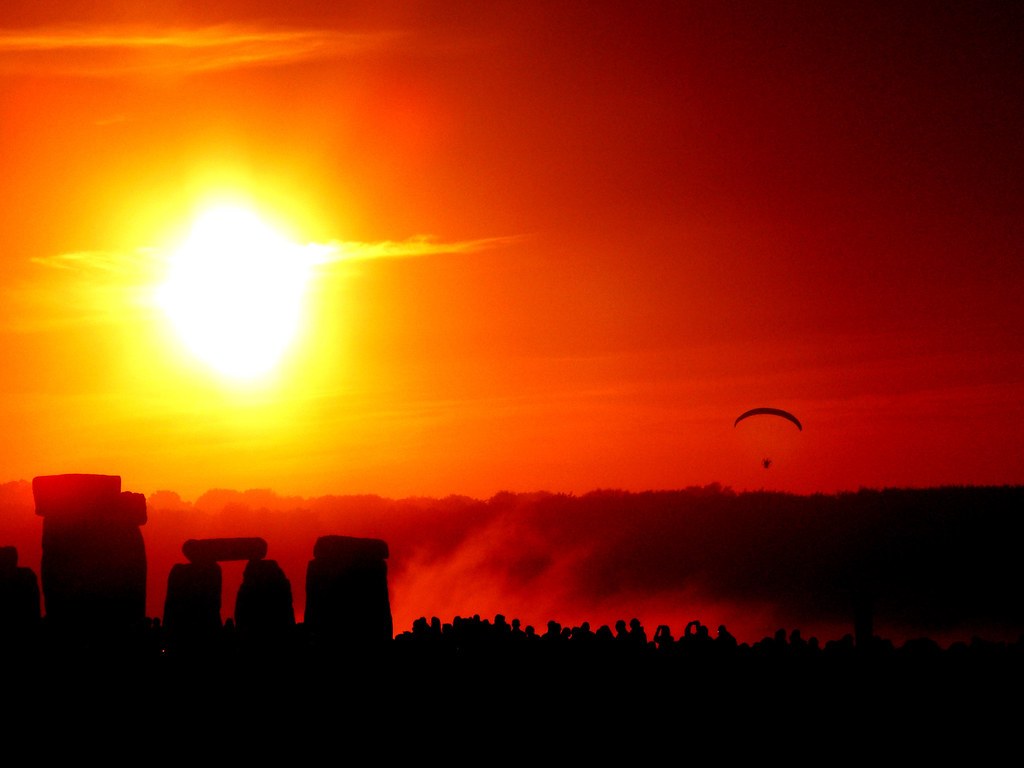
                    In the UK, the Summer Solstice holds a significant place in history and culture. Ancient monuments like Stonehenge and Avebury align perfectly with the solstices, suggesting their importance to our ancestors. These stone circles were likely used for ceremonial and astronomical purposes, celebrating the sun’s life-giving energy. I’ve yet to see them myself but I am certainly planning a visit soon. Some witches and Pagans go and visit these monuments during the Solstice as part of their worship. 

                    Historically, the Summer Solstice was a time for community gatherings, feasting, and merriment. Bonfires were lit to honour the sun and its power. These fires were believed to protect against evil spirits and ensure a bountiful harvest. The solstice was also a time for lovers, with midsummer’s eve considered auspicious for romance and marriage. Oh er! 

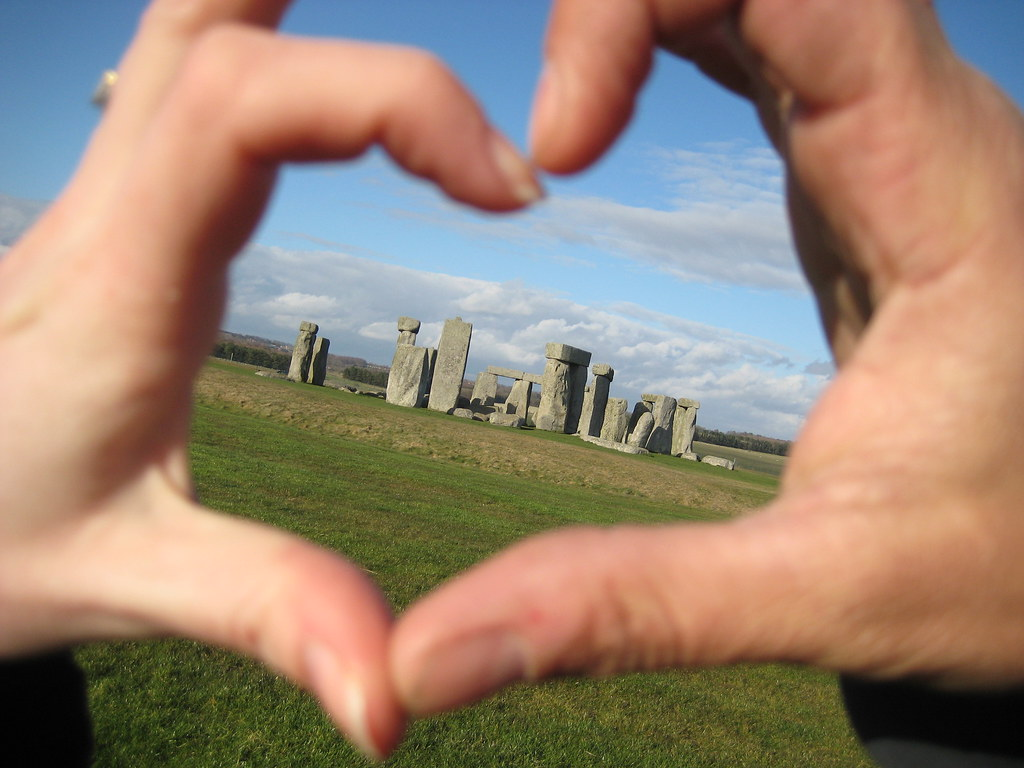
                    Stonehenge Heart” by Jose and Roxanne is licensed under CC BY 2.0.

                    The Summer Solstice in Witchcraft Practices

                    For witches, the Summer Solstice is a powerful sabbat that celebrates the sun at its peak and the life force it embodies. It is a time to honour the Earth’s abundance, embrace the light within ourselves, and prepare for the waning year ahead. Litha rituals and celebrations often incorporate themes of light, growth, and the balance between fire and water.

                    I like to use it as a period to take stock of the start of the year, make adjustments or have celebrations for my areas of growth  and use it as a time to plan my next steps and make adjustments. 

                    How Witches Celebrate the Summer Solstice

                    Rituals and Ceremonies

                    1. Sunrise Rituals: Begin your solstice celebration by greeting the sunrise. Find a quiet, natural spot to witness the dawn. As the sun rises, meditate on its light, warmth, and energy, feeling it infuse your spirit. No garden or park? No worries, you can do this by a window or anywhere you can get natural light. I do this daily in my bathroom as it’s always facing the sun as I get ready in the morning. 
                    2. Creating an Altar: Now not all witches need Altars but if you are that way inclined decorate your altar with symbols of the sun and summer. Use candles, sunflowers, seashells, and crystals like citrine and amber. Incorporate fresh herbs such as St. John’s Wort, chamomile, and lavender. Add representations of the elements – a bowl of water, a feather, a stone, and a candle. Have fun foraging and remember to be respectful! 
                    3. Bonfire Magic: Light a bonfire or a simple candle to honour the sun. Write down intentions or things you wish to release on small pieces of paper and burn them in the fire, symbolising transformation and purification. Make sure to practise fire safety etc. 
                    4. Herbal Offerings: Collect herbs and flowers associated with the solstice. Create small bundles or wreaths to offer to the earth or hang in your home for protection and prosperity.
                    5. Water Rituals: Balance the fire of the solstice with water. Visit a natural body of water – a river, lake, or ocean – and immerse yourself, symbolising cleansing and renewal. If you cannot visit a natural source, a ritual bath with added herbs and essential oils can be equally powerful.
                    6. Feasting and Community: Gather with friends or fellow witches for a solstice feast. Prepare dishes using fresh, seasonal produce. Share stories, songs, and dances around the bonfire, celebrating the community and the abundance of the season. Why not use some magickal stocks in your recipes

                    Spring Valley Nature Walk 4” by H. Michael Miley is licensed under CC BY-SA 2.0.

                    Ways to Celebrate the Solstice

                    1. Nature Walks: Spend time in nature, appreciating the peak of summer. Collect natural items like stones, feathers, and flowers to use in your rituals or as offerings. I’ll sharing some of mine over on Tiktok if you wish to join me
                    2. Crafting Talismans: Create talismans or amulets from natural materials. Infuse them with your intentions for protection, prosperity, or love. I love making poppets out of field grass. 
                    3. Meditation and Reflection: Reflect on the year so far and set goals for the remaining months. Meditate on the balance between light and dark, growth and decline.
                    4. Gardening: Engage with the earth by tending to your garden. Plant new seeds, nurture existing plants, and harvest herbs for your magical practices.
                    5. Reading and Learning: Use this time to expand your knowledge of solstice traditions and witchcraft practices. Read books, attend workshops, or join online communities to share insights and experiences.

                    Are you celebrating Litha or the Summer Solstice? If so let us know below and via our social channels as we love to share with the wider witch community. 

                    Have the BEST Solstice, until next time, darlings! 

                    Ems xX

                    @Bunnypudding (Tiktok) / @Bunnyscopes (Instagram)

                    Profile picture source: “Fremont Summer Solstice Parade 2010” by .curt. is licensed under CC BY 2.0.

                    Why is 8th August the luckiest day of the year? – What is The Lions Gate Portal

                    It’s the 8/8 which means it’s the Lions Gate Portal! Here is how to use it to super charge your manifestations.

                    Top Level: 

                    • Key Date: 8th August 2022 is considered the Peak of The Lions Gate Portal.
                    • Magick: Is a great time to manifest your goals dreams – if using the moon is the moon phase will be Waxing Gibbous in the sign of Sagittarius. (Also see spells below)
                    • Ends:12th August ends. 

                    What is The Lions Gate Portal? 

                    Put simply, The Lions Gate Portal is considered one of the strongest magickal periods of the annual astrological calendar. It celebrates the alignment of Earth, The Sun in Leo, Sirius (The dog star, the brightest star in the sky and not the Harry Potter Character but he does have the star as his namesake) and the constellation Orions belt. This alignment happens every year and at the same time, from 28th July to 12th August. 

                    The activation happens on the 8th of August and is believed to be when the period is at its peak for manifesting and spell work. Yey!

                    *Featured top image credit: Hubble Peers into the Mouth of Leo A by NASA Goddard Photo and Video

                    Image: star collage (leo)
                    by bitmask

                    Why is The Lions Gate portal important to witches and spiritual practitioners? 

                    We can use this energy to empower our manifesttaions and spell work. 8th August can often be refered to as the luckiest day of year, so it’s a perfect time to try your luck by going large with your manifestations. Dream house? Go for it. Perfect job change? Make it happen. Want love? Attract that energy to you.

                    The key to this period is keeping that energy up and truly believe that anything is posible and making sure you’re intent and desires are clearly expressed. Don’t chase, attract, honey!

                    Astrology:

                    • The Sun is the ruler of Leo, therefore when The Sun enters Leo every year to mark Leo season, this creates really positive and powerful energy which is hypercharged during the Lion’s Gate Portal period. 
                    • Leo is a sign of ‘self’:  ego, of understanding yourself on the inside and how you present outwardly, self-confidence, confidence and bravery. Basically, it’s a perfect time for manifesting the dreams and desires that are associated with you and your goals.  Go big or go home is certainly an apt phrase for Leos and their approach to life and also this period energetically. Therefore, it’s a great period to manifest career or life goals. 
                    • Locate where Leo is in your birth chart and what house it is in, this will guide you in where you should be focusing your attention when it comes to manifesting goals during this period.

                    Numerology:

                    • 8/8 is considered a very powerful number in numerology meaning: Abundance, luck and growth. The number 8 is considered lucky and powerful in cultures throughout the world.

                    Symbology:

                    • The infinity symbol  ∞ equals 8 and is considered the symbol for manifestation. As above, so below.

                    How can I use it for my magick? 

                    Some start from the 28th July and build up (like me!) but the peak period is considered to be the 8th of August (8/8) to use this energy in spell work is very simple, so for those just starting out below is a simply but effective way to manifest your desires. 

                    Perfect for beginners: 

                    The Everyday Extra Empowerment: 

                    • Meditating in the Sun – and visualising what you desire in detail is fabulous way to use that strong the Sun in Leo energy.
                    • Journaling – every morning with prompts to help progress you towards your goal. 
                    • Affirmations – choose 8 affirmations that present what you wish to achieve over the next year and say them to your self in the mirror. I recommend doing an affirmation in mirror every morning anyway.
                    Meditation time
                    by _Hadock_

                    Simple Manifestaion practice on the day: 

                    • The Diary Method: 

                    What you will need: 

                    • Pen or pencil..hey, why not even use a quill, add some drama!
                    • Paper (or parchment…you see where I am going here!) 

                    Method: 

                    What is your dream life? No really, what is your dream life and if you were to live your dream life what would you be doing in a day of that desired existense, say, in a years time? Really visualise this and do not hold back. This is your absolute dream. Really think about it and visualise the reality of living it for a few minutes. This will help setup your vibration and help you performed the next step: 

                    • Get your paper or note book and write the date as a year from now:  8th August 2023 
                    • Under the date begin to  write a diary entry as if you were living your dream life on that day in a years time. Be detailed, the more detail the better.
                    • Once completed, release the intention of what you have just written into the universe, speak out loud or silently to yourself that you are accepting it as done and thank the universe for sending that desire to you. 
                    • Seal up the letter if not in a notebook and store somewhere safe and don’t open/read for a year. 
                    • Open in a year and see how much as come true – honestly, I have done this a few times and have aways been surprised! 

                    If you like this method you can regularly keep up entries in your books of spells, grimore or similar. I personally keep a separate manifestation journal which keep writing in to help me maintain focus on my goals and allow me to look back at my progress. 

                    diary writing” by freddie boy is licensed under CC BY-SA 2.0.

                    Ritual for those who want a side of ‘ceremony’: 

                    Some of us love to use ingredients in our spell craft , or we just like a bit of drama, some of us it’s both…I certainly love to make things ceremoinial! The Lions Gate Portal is a perfect time to make to add extra ingredients to your usual manifestation methods such as candle, herb and craft magick. The below if simple but effective way to use fire (Leo’s element family) in your manifestion practices.

                    You will need: 

                    • Bayleaf – you can get this fresh but store brought is fine, and the one we mainy use at Digital Coven (We should invest in stocks the amount we use it to be fair) 
                    • A Candle (lighter or matches if you don’t have a candle to hand..all witches run out!) 
                    • Fireproof bowl or Cauldron 

                    How to Manifest on The Lion Gate Portal: 

                    I personallylike to do these spells in the moon light and outside if posible. I have also lived in a flat and shared houses so rest assured, if you can do either of the things, your magick will be just as potent – this is all about your intent and belief of course…you’re the main ingredient for this spell! 

                    Bay Leaf, Fresh and Dried” by Clint__Budd is licensed under CC BY 2.0.
                    • Get a Bay leaf and hold it close, envision the intention/dream/desire that you wish to attract
                    • You have to visualise this as if it has already happened making sure to really envision how you will feel when you receive this desire and all the things that you will do with it. 
                    • Write your intention onto the Bay leaf and burn in the fireprool bowl (or cauldron) . You can use any colour pen but if you have Silver or Gold marker I would recommend using this to further highlight your goals.
                    • Release your intention into the universe and give thanks to universe for it abundance. Then, wait and trust the process (it works quicker than you think!) 

                    For more info on using Bayleaf, check out my post on why Baeleaf is Bae and if you’re planning on doing moonwork for these spells then, AJ goes in-depth on her Witchcraft for beginners post here

                    • For those working with the moon specifically,  the moon phase will be Waxing Gibbous in the sign of Sagittarius
                    Waxing moon, North Window
                    by ArchesNPS

                    So Coven, hopefully we’ve got you all excited about the Lions Gate Portal? If so,will you be using the Lions Gate Portal to manifest your dreams and goals this year? Let us know below or on our social channels. 

                    Happy practising, darlings…may your dreams come to pass ❤ 

                    Love, Emma 


                    What is the Wheel of the Year? An introduction to the Sabbats

                    If you’re new to the craft you may have started spotting new celebrations you have never heard of starting to appear on your News Feeds, especially on TikTok. Don’t be fooled by thinking the Wheel of the Year is something only used by Wiccans but also, if you don’t want to follow the Wheel of the Year, you don’t have to either. Everyone’s practice is personal. 

                    As you’re here at Digital Coven to learn and discover, it would have been remiss of us to not at least introduce you to the sabbats. As a caveat before we get into the nitty and gritty, the dates I’ll be using are for the Northern Hemisphere as that is where I am and is what I know and I wouldn’t want to get anything wrong.

                    The Wheel of the Year, is a medley of fire festivals, chief solar events, equinoxes and solstices. Almost a calendar for the working pagan / witch / Spiritual Person™ . The Sabbats and a lot of Magic is seasonal and an easy way to connect to your path as a beginner, especially if you’re still not open about your craft yet.

                    This post in particular is more of a ‘starting point’ or a snapshot to the sabbats and the Wheel of the Year, throughout the year we will include more detailed posts for you so you can learn as much as you can in one place.

                    Now, let’s get cracking. 

                    Yule – 21st December

                    Everyone knows this one. Associated with Christmas, the Wild Hunt, the deep midwinter. It’s actually a 12 day long celebration too so no need to worry if you miss the first day. 

                    SHE'S A WITCH!! Hiding in the shadows we see a witch shrouded in darkness, mystery and, most importantly, black velvet. 

She seems older than her years yet her hands are still that of a maiden. She holds a bare wreath in her hands but you get a feeling that this isn't just a standard wreath. It is 'more' in capital letters. Something powerful.

In front of our witchy friend is a red candle glowing which is the only colour in the image. 

Beside the candle is a christmassy reindeer which feels out of place. Out of place but belonging.
                    Witch making a wreath and Yule

                    Here are a couple of starters for ten in terms of rituals and celebrations: 

                    • Bring green into the home. If you’re still in the broom closet that can simply be a wee christmas tree.  At this point of the year, there is little to no natural growth so bring that life inside to encourage a healthy winter. Also, some pagan traditions suggest that by bringing in  a tree to your home, you’re providing somewhere warm for the woodland spirits during the winter and they will thank you with abundance in the spring.

                      Personally, I like to gather local holly and hang it through my home.
                    • Welcome back the sun. As Yule starts on the Winter Solstice, this is the beginning of the astrological winter (in the Northern Hemisphere) and the point where the nights can reach their darkest.

                      Light candles, hang fairy lights, I like to light a candle as I cook.

                    • Yule Log: There are actually a couple of variations of this.

                      If you have an open fireplace, you can burn a specially chosen log on Christmas eve. You can ‘scent’ with cinnamon as well for the vibes and protective qualities.

                      You can create a Yule Log display for your altar / space. Find a log, decorate it how you feel with candles, greenery runes and sigils.

                      Eat a chocolate Yule log, great if you’re still not open with your craft.

                    Imbolc – 1st February 

                    Meaning ‘in the belly’, imbolc is a celtic festival originating in Ireland and represents the stirring of new life. This is where the earliest signs of rebirth appear, sometimes in the form of new leaves and buds. The world is getting ready to wake up again. 

                    White and green snowdrops sit on the mossy ground. They're open but pointed downwards as though they are hats on invisible fairies.
                    Snowdrops on the mossy ground

                    Imbolc is also associated with the Goddess Brigit / Brigid/ /Brighid Bríg. Some may already know her as St Brigit. Brigid is a fire goddess and often associated with protection, healing, smithcraft, and poetry.

                    In the Christian calendar, this date is also marked by Candelmas so some of the traditions may be the same or similar. 

                    Things you can do to celebrate imbolc:

                    • EAT: As with all festivals of the Wheel of the Year, this is a time to feast. Foods associated with imbolc are those that would traditionally be available when it was still winter. Dairy products like milk, cream and butter as this would be the time of the ‘first milk’ since winter, baked goods, dried foods. What you would have been able to store in your pantry to get through until spring.

                      Bake bread, pies and cakes and look for foods that are associated with sun and rebirth, eggs are a nice easy one if you’re low on energy you can just scramble an egg in the microwave as a way to honour the festival.
                    • Leave an offering for Brigid: traditionally the first milk would have been poured on the ground for Brigid.

                      When it comes to food offerings, especially in the current climate where the cost of living is soaring, this may not be the most practical. Instead, pour yourself a glass of milk (plant based counts too), or make some buttery toast. Toast Bridgid before you consume instead of leaving out / pouring away. This way she has been thanked and you have been nourished at the same time.
                    • Plant seeds: This is the time to start sewing your seeds (but do look at an Almanac to be sure depending on what you’re planting). If you’re like me and don’t have access to an outside space,I  treat myself to a herb plant around this time or try and regrow things from scraps (leeks, ginger and garlic are really easy to do this with). 

                    Beltane – 1st May

                    Beltane is the first Fire Festival of the year and where celebrations really start to begin. Beltane originates in Ireland from the celtic god Bel. Traditionally, bonfires would be lit to honour Bel and also to celebrate the return of the sun and spring with longer days coming ahead. You may also be thinking May Day and May pole and you’d be correct!

                    Flower crowns, ribbons, white dresses. It's pure spring party vibes right here as children surround the maypole.
                    Maypole dancers gather around the Maypole

                    Beltane is around the time of year where everything has really sprung to life and as such is also associated with fertility and the idea of ‘everlasting’. 

                    The bonfires lit for Beltane were often public bonfires that people would ‘jump’ for protection and fertility and before they were extinguished, the people would take some of the fire with them to light their hearths.

                    Things you can do for Beltane:

                    • Have a BBQ / Bonfire if you have the space: You can’t really have a fire festival without fire, can you? If this isn’t possible for you, lighting a candle works just as well.
                    • Dress in Beltane colours: Green, red, white. Green for regrowth, fertility and abundance, red for passion and vitality, white for cleansing and clearing of negative energy. Now’s the perfect time to practice your colour magic.
                    • Make a flower crown: Even a simple daisy chain will do!

                    Summer Solstice: 21st June

                    Probably the most famous solstice, the one you see on the telly every year where people flock to Stonehenge to take in the vibes. This is Midsummer (like Yule is midwinter) and also the longest day of the year. Many will make a pilgrimage to Stonehenge or other spiritual sites, but if this is not possible for you, there is plenty you can do at home too.

                    Stonehenge is standing proud with the Milky Way above. The Milky Way almost looks like magic itself but there is no up or down. Is the magic flowing into Stonehenge or is the magic radiating from it?
                    Stonehenge at night with starry milky way sky on winter solstice.
                    • Sunrise and Sunset: As the longest day, we celebrate the sun. Watching both the sunrise and sunset means you can experience the most of the day. To be honest, even opening your curtains and staying in bed can work too if it’s not possible for you to be up and about at this time.
                    • Sun Symbols: a simmer pot or even food made from lemons and oranges as we honour the return of the sun. I make an orange drizzle cake (mostly because i don’t really like the taste of lemon!) and you can easily buy things like lemon cakes if you can’t make them.
                    • Colour Magic: dress, display or even use coloured candles in your rituals. Yellow for the sun, green for the earth and blue for the sky. 

                    Lammas / Lughnassadh – 1st August

                    Lammas literally translates as ‘loaf mass’  and is the time we celebrate the first grain harvest (basically, the first of many harvest festivals). Lammas is also known as Lughnassadgh and Lugnasad. 

                    A single chunk of bread lies on a worn wooden table next to some chestnuts in a dark and moody room. The bread has been picked up so there are a few crumbs around. Was this from a midnight snack? Or could this be an offering for unknown spirits.
                    bread on a wooden table

                    As with many dates on the wheel of the year, particularly those that follow Lammas. This is a time where we give thanks for the harvest and feast as well as honouring Lammas, our harvest queen.

                    Things you can do for Lammas:

                    • Eat bread: Whether you have baked it or bought it, just… bread.
                    • Make a corn dolly / mother: these are traditionally made out of wheat but this isn’t always easy to come by, especially if you live in a big city. If you can’t access wheat you can use straw, which you can find in pet shops, or even draw one for your altar.
                    • Colour Magic: Dress in oranges golds and yellows to represent the harvest

                    Autumn Equinox / Mabon – September 19th – 22nd

                    Another transitory time where the days start getting colder and shorter. The leaves are starting to turn red and orange, occasionally there will be a little bite in the air… Autumn in my favourite. 

                    The sun is rising, mist and an eery glow. Bare, shadowy trees frame the sun. It's beautiful, cold and warm at the same time, with an almost haunted feel
                    Misty wood

                    The Autumn Equinox is also known to some as Mabon, you’ll see this more often in American Wicca or witchcraft practices. This is the time of Mid-Harvest, particularly for fruit. As the seasons change we would traditionally start preserving food for the winter and long night ahead.

                    Things you can do for the Autumn Equinox:

                    • Jam: like to go to my nearest woods to gather blackberries around this time and make jam with them. I like to plan the foraging and making around the  full moon where I can as well. If you don’t have access to blackberries, buy the fruit you like and make some from that. If you can’t make jam, get some jam for jam on toast… Say jam again.
                    • Decorate your altar: Basically lots of Autumn-y things! Acorns, pine cones, leaves, the colours of autumn! Also, if you happen to find an acorn during this time… save it for Imbolc and plant it under the first tree that blossoms.
                    • Stew and Kitchen Witchery: Autumn is the time the Kitchen witch THRIVES. Making stews with seasonally appropriate food, ‘canning’ for the winter and basically living our best lives. I have previously shared my ‘mabon’ casserole on TikTok, and Emma has her own go-to stock recipe that can be utilised at this time. Anything hearty and warming. As you cook, you can include your intentions and wishes for the season too.

                    Samhain / Hallowe’en – 31st October

                    Also known as AJ’s Christmas… Samhain is the point where the nights are at their darkest, the veil is thin and spirits can wonder again, not only that… it’s the Witches’ New Year.

                    pumpkin

                    Any Scorpios here, this is where you are at your most intuitive. Some of us feel the energies of the spirits as they come and go, we can celebrate the cycle of life and death as the Witches’ year and the nature around us has ‘passed’.

                    Samhain has its roots in Celtic practices, particularly in Ireland. We have the legend of Stingy Jack and how he lead to the creation of the Jack-O-Lantern, bonfires would be lit and costumes would be worn to ward off unwanted spirits. 

                    Anyway, surely you know a lot about Samhain / Hallowe’en so let’s get down to what you can do…

                    • Jack – O – Lanterns: It would be remis of me not to include these, sure they seem a little obvious but let’s remember they have been used for centuries as a way to light the path home for family spirits and also to ward off unwanted energies. As you carve your pumpkin, you could make it a ritual. I like to ‘set a vibe’ with incense and music as I turn my pumpkin into a protective ward for the evening. No energy or ability to carve a pumpkin? That’s OK. I have a collection of Pumpkin tealight holders that work just as well, they’re only £1 from Poundland!
                    • Soul Cakes: Soul Cakes are generally a gift for the spirits and can be left as offerings on Samhain night. I have used my own amended version of this recipe for a couple of years now. Baking not possible for you? Get yourself your favourite cookies or biscuits. You can even get some of those little icing pens and add sigils to them or even names for the dearly departed you’re leaving them for.
                    Bonfire on a dark night

                    So, there we go. A little snapshot into the Sabbats, be sure to add them to your diaries and celebrate the old ways with us.

                    If you want to follow Aj check out her fabulous social accounts:

                    TikTok

                    Instagram

                    Until next time!

                    Event: 3 Wishes Fairy Festival

                    Exciting news from Karen Kay, aka The Fairy Lady & founder of the 3 Wishes Fairy Festival

                    COME AWAY WITH THE FAIRIES TO MAGICAL CORNWALL!

                    Exciting news from Karen Kay, aka The Fairy Lady & founder of the 3 Wishes Fairy Festival

                    We couldn’t be more excited here at Digital Coven as we love a good festival! The 3 Wishes Fairy Festival, dubbed the UK’s most magical event, returns to Cornwall in June after a two year pandemic absence. 

                    The family and pet friendly event takes place from Friday June 17 to Sunday June 19 at Mount Edgcumbe country estate, near Torpoint and will feature 100s of workshops, talks and performances, a big top circus and music among its attractions (all included in the ticket price). 

                    Alongside the entertainment many festival-goers will be embracing their inner ‘fairies’ or ‘elves’ creating a fun and colourful experience for everyone. Ahhhhh, we are so there, Bunnybunny (Emma) has always been partial to dressing like a fairy!

                    Woman dressed as a fairy
                    Emma still has the outfit and is willing to get it out with little notice

                    “I’m absolutely thrilled to be able to bring the festival back to Celtic Cornwall, the home of fairies, for the first time since 2019. This year, we’ve got music, activities, great vegan food, workshops, circus shows, special guests, meet and greets, and so much more. We even have a magical mermaid grotto with ‘real’ mermaids. There will be more magic than you can shake a fairy wand at,” Karen Kay said

                    Visitors to previous festivals have described the experience as ‘like stepping into a real-life fairy land’, and this year’s event promises to be even more magical with fantasy creatures such as gnomes, mermaids, elves, pixies and fairies wandering the site and fairy tea parties celebrating the festival’s 16th birthday. You has us at gnomes to be honest but ended strong on fairy tea pary, we can’t lie.

                    The festival was founded by the former BBC journalist in 2007. Karen, who lives near Truro, is a fairy author and is known as The Fairy Lady. She was guided to create a Midsummer gathering by the fairies she has been communicating with since she was a child. 

                    ‘The Fairy Lady’ Karen Kay who is founder of The 3 Wishes Fairy Festival

                    She said: “I first saw fairies when I was a little girl, around the age of five or six. I would help my grandmother as she pruned the roses in her garden, and I would gather up the rose petals to make perfume for the flower fairies! I’d leave the concoction (rose water) out overnight for my fairy friends, and when I’d check in the morning, the perfume would be gone! 

                    “My fairy friends appear as tiny vibrant lights and have stayed with me since childhood and into my adult life, and I can honestly say, there’s never a dull moment when the fairies come out to play!

                    For three days and nights, the grounds of Mount Edgcumbe House and Country Park on the outskirts of Torpoint will be transformed. Day tickets for the festival are available, yet for those wishing to stay, the event accommodates tents, caravans and campervans and there’s also a glamping option to rent bell tents, ‘shire’ homes and traditional caravans. A camping area is also available for disabled festival-goers which does need to be booked in advance. 

                    Picture by Danniella-Jaine who specialises in ‘fairy’ photography – https://www.danniellajaine.com

                    The 3 Wishes Fairy Festival is the first UK fairy festival to be totally vegan, with all food on-site provided by vegan caterers, with gluten-free options available. 

                    Ticket prices have been held at early bird prices until the end of April with a three-day ticket at £100, day tickets £40 for adults and £20 for children with free admittance for children under the age of seven. For more information visit www.fairyfestival.co.uk

                    Will you getting a ticket? If so let us know below or via our digital channels, as we want to know and we really, really want to see your outfits!

                    Instagram

                    Tiktok

                    Until Next time, Coven!

                    Love, love,

                    Witchcraft Around The World: 30th April -Walpurgis Night

                    Witchcraft Around The World: The fabulous Tanja, shares her insight into Walpurgis Night.

                    We love learning about all different type of Witchcraft here at Digital Coven and today we have the fabulous Tanja, sharing her insight into Walpurgis Night.

                    Take it away, Tanja!

                    Greetings fellow witches! You may or may not be prepping to celebrate Beltane this weekend, so I thought I would make you familiar with what I like to call its “German goth counterpart”, – Walpurgisnacht, or the Night of the Witches, which takes place on the night of the 30th of April.

                    About Beltane

                    As you may know, Beltane is the pagan festival held halfway between the spring and summer equinox, celebrating the blossoming of trees and flowers and the days getting warmer. It takes place between 30th of April and 1st of May and therefore traditionally includes May Day celebrations which span across many different cultures – Celtic, German, Hawaiian and Greek, to name a few. They include dancing around a May Pole, making flower crowns and crowning a May queen (not to be confused with the customs of Midsommar – neither the Swedish festival nor Ari Aster’s horror masterpiece).

                    The Fire Festival

                    Beltane, from the Gaelic Bealtaine, can be roughly translated to “bright fire”. On the eve of May 1st, Pagans would gather to light bonfires and dance around them – since fire typically stands for purification and new beginnings, this ties in with Beltane’s themes of renewal and summer returning. 

                    Like on Halloween (Samheim) and Midsummer, the veil between the realms of the living, dead and spirits is supposed to be especially thin this time of year. It is therefore no wonder the night became associated with witchcraft, its literal Dutch translation being “Heksennacht”, the night of the witches, which in German folklore became associated with a night where evil witches gather to plan their mischievous schemes.

                    The History of Walpurgis Night

                    For this negative association, we can thank the Catholic Church – as pagan beliefs did not fit in with the Christian religious ideals, during the Middle Ages they attempted to stamp out any other religion’s customs, including those of Beltane, throughout Europe. Walpurgisnacht i.e. “Walpurgis Night” derives its name from the Catholic missionary turned Saint Walpurga, who was celebrated for succeeding at putting an end to “pagan sorcery”

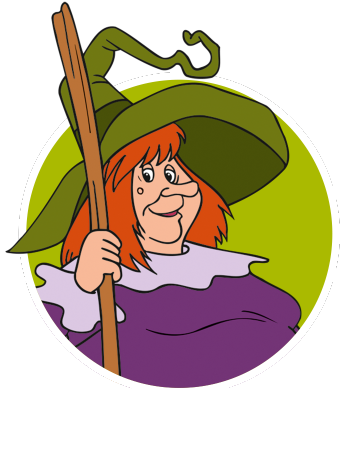
                    Ironically, the image I associated with Walpurga until researching this date stems from a popular German children’s cartoon about a teenage witch – In this, she is the leader of the coven and looks like this:

                    As someone who grew up Catholic, that doesn’t look very pious to me, which goes to show that Walpurga today is associated way more with witches than she would have liked. Sorry, gal!
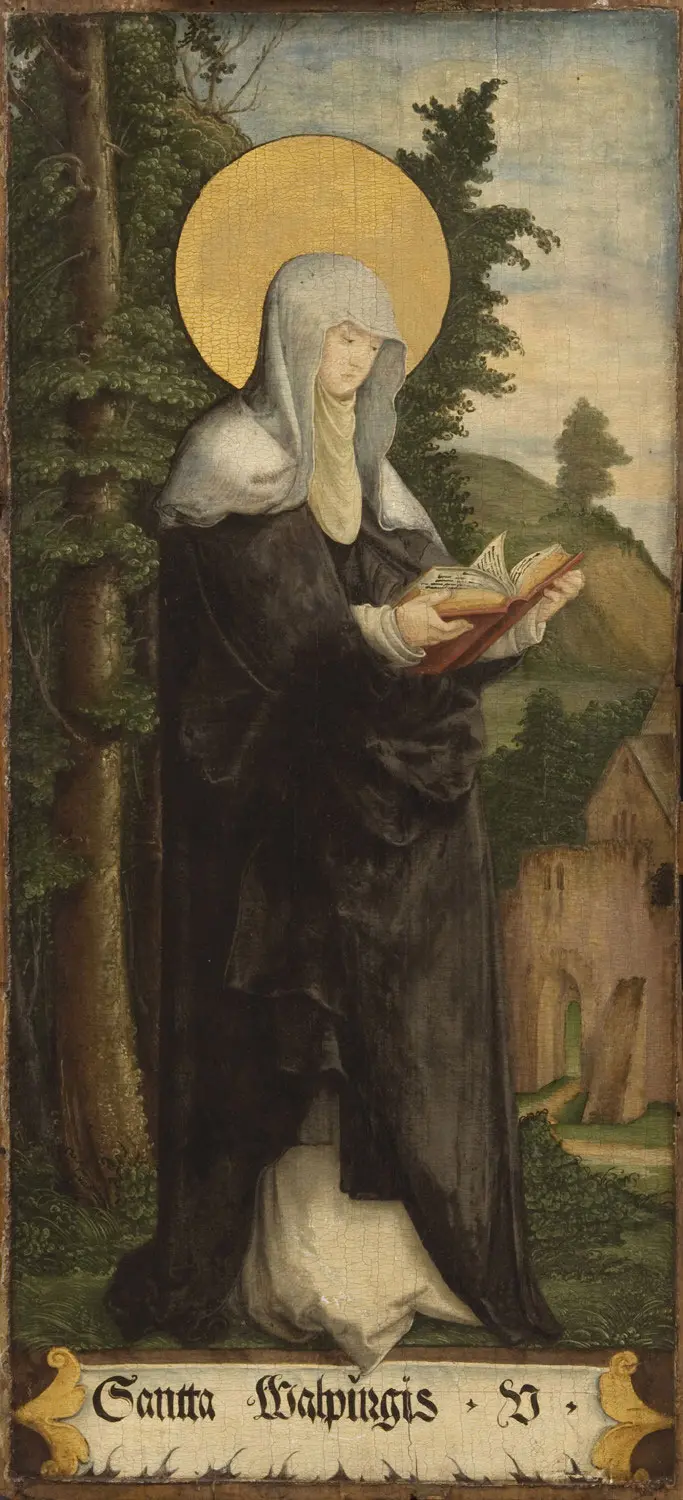
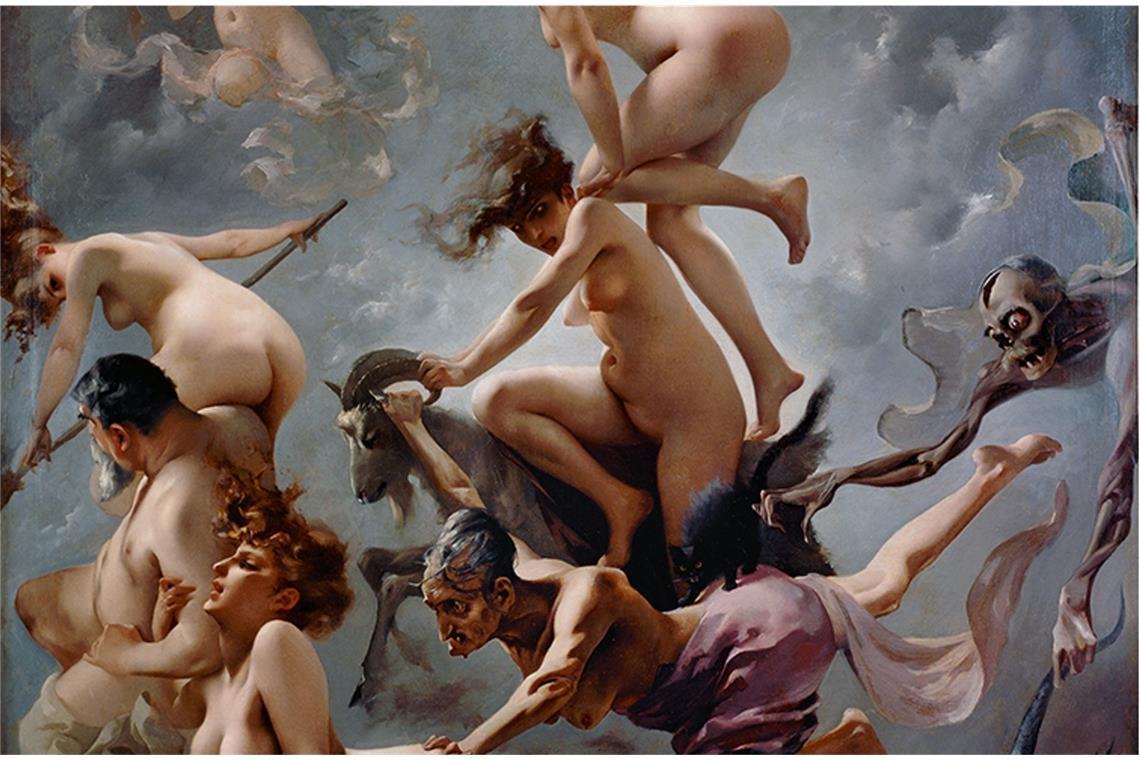
                    To give her credit, Walpurga actually did see to it that the pagan rituals didn’t completely die out: She was canonised on the 1st of May, and therefore, likely by accident, Christian and Pagan customs became entwined. Pagans could continue their celebrations without fear of being condemned, by doing it under the guise of honouring Saint Walpurga (article). 

                    So, these practices could be continued quite freely in Medieval Germany, until the 16th century, which saw a massive hysteria about witchcraft followed by one of the most gruesome and bloody witch hunts in history taking place in Germany.

                    During that time, hysteria led people to believe that witches would gather on Mount Brocken, the highest peak in Germany’s Harz Mountains, to have orgies, dance, and meet with Satan to discuss how they could bring the most mischief and evil to the coming year (no, really).

                    Ein Bild, das Text, Zeichnung enthält.

Automatisch generierte Beschreibung
                    The actual Saint Walpurga


                    According to some legends, witches would gather in the valley and then ride up to the mountain’s peak – not just on broomsticks, but even on cats or goats!

                    In an attempt to protect themselves from evil spirits and witches, locals would gather on April 30th to light bonfires, burn straw men and make loud noises to chase away evil. The joyous pagan rituals for fertility and summer returning therefore morphed into a gathering driven by fear. Well done, Catholic Church!

                    Luckily, those superstitions began to gradually die out and Walpurgis Night celebrations carried on but became more light-hearted, as people would gather around the fire, celebrate, and sing folk songs. The festival might not still be part of the German Zeitgeist today had it not been for Goethe’s famous poem Faust, published in the 19th century, which sees the protagonist travelling to Mount Brocken and taking part in the witches’ celebrations.

                    This poem, loathed by German highschoolers throughout the country, re-popularised Walpurgisnacht and is likely to thank for why it is still popular today.

                    Modern Day celebrations

                    Today, Walpurgisnacht remains part of German popular culture, with many other stories about the Witches’ mountain gatherings having sprung up in the century following Goethe’s Faust.

                    As for the celebrations, most that remains of them is the lighting of and gathering around bonfires, although this is now being celebrated under the new motto of Tanz in den Mai – “Dance into May”. Turns out, pagans, legendary witches and normal human beings alike love a bit of revelry and dancing around a fire! Due to the first of May being a bank holiday, Labour Day, people still traditionally like to go dancing at clubs which do “Tanz in den Mai” themed nights. I have taken part in many of these club nights and regardless of alcohol levels, the night has always felt special to me. Maybe there is something to the veil between the worlds being more permeable. Or maybe I just feel very seen as a witch on this holiday which is, in a way, dedicated to us. 

                    Thanks, Tanja!

                    You can stay in touch with Tanja and find her shitposting and creating other digital content about drag, queer and witchy stuff on Instagram @tanjaktx and Tiktok @tanjatix

                    If you wish to write an article for Digital Coven please get in touch on our contact page or just pop an email over to us on digitalcovenuk@gmail.com or you can always reach out via our social channels:

                    Tiktok

                    Instagram 

                    Until next time,

                    Love,

                    Featured Image: “File:Edinburgh Beltane Fire Festival 2012 – Bonfire.JPG” by Stefan Schäfer, Lich is marked with CC BY-SA 3.0.