What is The Autumn Equinox / Mabon

Learn all about the Autumn Equinox also called Mabon in some witch practices, in todays post by UK Witch and Tarot reader AJ

The wheel of the year continues to turn and it’s time for another feast day. The Autumn Equinox is here, to some practices, called Mabon (Mah-bon), after Welsh God Mabon, son of Earth Mother Goddess, Modron (who actually has nothing to do with the equinox…)

When is the Autumn Equinox / Mabon?

The Autumn Equinox almost always falls on either the 22nd or 23rd September (although in rare cases the window is from 21st September – 24th September at 02:03am BST.

In 2025, the Autumn Equinox is Monday 22nd September.

What is the Autumn Equinox?

The Autumn Equinox marks the end of summer and the beginning of Autumn, on this date, day and night are of equal length before the longer nights and shorter days start creeping in. Everything is at that perfect balance but also on the cusp of change.

What is Mabon?

Mabon is a feast in reconstructed paganism and the Wiccan faith, it only really started becoming labelled as Mabon around the 1970s but for many, the name kind of stuck.

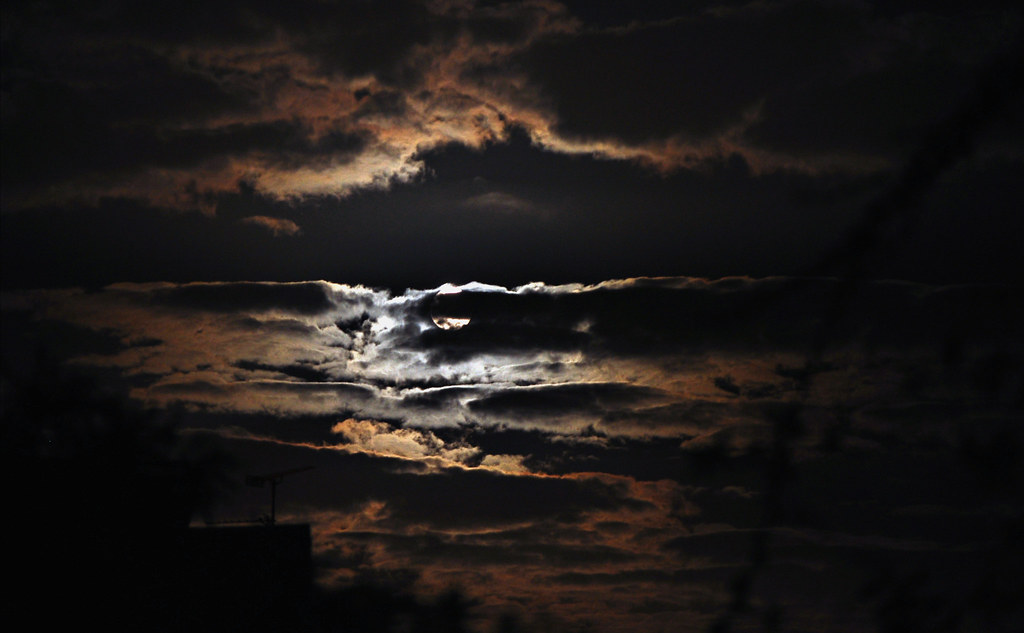
Mabon is not only become the feast of the Autumm Equinox but also the Second Harvest, the Harvest of fruit and around the ‘harvest festival’ which some of you may remember from school. The Harvest Festival is traditionally celebrated on the Sunday nearest the harvest moon, the full moon nearest the Autumn Equinox.

It’s a time to reflect and celebrate on the year so far with the ‘reaping what you have sown’ mentality and seeing all of the benefits of your hard work so far.

For me, the most important part is the resting side. As the days grow darker and the nights grow longer, we are supposed to rest. After the feast and celebrating is done, we are supposed to retreat, use less energy and get through the winter. Like we used to before *capitalism*.

How can I celebrate the Equinox / Mabon?

Whether it’s making blackberry jam with your own little fruit harvest or just embracing the autumn aesthetic and adding some colour magic to your wardrobe, here are a bunch of things you can do to celebrate the equinox and Mabon, some low energy and some more intense:

  • Dress in Mabon colours: just as the leaves have changed, embrace earthy colours to match. Browns, deep reds, golds and dark greens
  • Eat Seasonal Food: I love to make a stew using squashes (like pumpkin) from the local organic green grocer. Hopefully next year I’ll be able to grow my own! if that’s a little too much, an apple pie from McDonald’s is also valid.
  • Go Blackberry picking: Get your own little harvest, you can use these to make blackberry jam, pies and syrups or even just eat them with sugar and be thankful for the bounty. This is generally the last time the berries are still good.
  • Hold a thanksgiving ritual: Write a letter to the universe of everything you’re thankful for this year so far. You can make it proper witchy by burning the list on the day of the Equinox and releasing that thankful energy into the universe
  • Light a candle: With the nights growing longer we’ll need to bring more light in, I use yellow / gold candles to symbolise that the sun will return.
  • Wind down and get comfy: This is the time when we’re supposed to rest and hibernate so do not feel guilty about grabbing a blanket and settling in with a cup of tea and a good book. It’s what we’re supposed to be doing and it’s a ritual in itself.

How will you celebrate the equinox this year?

The History and Celebration of Lughnasadh and Lammas : Embracing the First Harvest Festival

Today is the first harvest festival of the year. Today we delve into the the History and Celebration of Lughnasadh and Lammas.

It’s August 1st darlings, which can mean only one thing – It’s time to Celebrate Lughnasadh! Who doesn’t like giving thanks and having a wee party, eh? Lughnasadh, also known Lammas in some areas of the UK, is a significant festival in the Wheel of the Year, marking the beginning of the Harvest season. Celebrated on August 1st, Lughnasadh is a time to give thanks for the first fruits of the earth and to honor the Celtic god Lugh. This ancient festival, rich in history and tradition, is a vibrant blend of pagan, Christian, and agricultural elements – Who doesn’t love a bit of diversity at a party, am I right?

The Historical Roots of Lammas

Pagan Origins

The term “Lammas” is derived from the Old English/ Anglo Saxon word “hlafmaesse,” meaning “loaf mass.” It was traditionally the time when the first grain harvest was celebrated, and loaves of bread were baked from the new wheat crop. These loaves were then used in rituals and as offerings. Who doesn’t love an excuse to eat cards, eh? 

Lammas corresponds with the Celtic festival of Lughnasadh, named after the god Lugh. Lugh was a god of light, skill, and craftsmanship, celebrated in many myths for his talents and leadership. Lughnasadh was a time for feasting, games, and community gatherings, reflecting the communal effort required for the harvest. Check out my other posts on Lughnasadh and Lammas – What’s the Difference?  And my post The Celtic Celebration of Lammas and the God Lugh for more info on these. (I know, I know, it’s an actual harvest of content today, isn’t it? You’re most welcome, coven) 

How It Inspired The Christian Tradition 

With the advent of Christianity, Lammas and Lughnasadh became ‘integrated’ into the Christian calendar. It evolved into a thanksgiving for the first fruits, and loaves of bread were blessed in churches. This blending of traditions illustrates the adaptability of early Christian practices to local customs and agricultural cycles. 

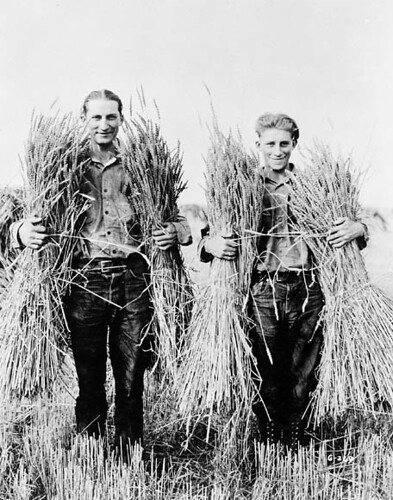
Two men from the British Isles harvest wheat / Deux hommes des îles Britanniques récoltent du blé” by BiblioArchives / LibraryArchives is licensed under CC BY 2.0.

Agricultural Significance

Lughnasadh / Lammas is deeply rooted in agricultural traditions. It marks the time when the hard work of planting and tending crops begins to bear fruit. The first grains of the year are harvested, a crucial milestone for agrarian societies. This celebration of abundance is also a reminder of the need for continued hard work to ensure a bountiful harvest in the coming months.

Celebrating Lughnasadh and Lammas Today

Modern celebrations of Lughnasadh / Lammas can vary widely, reflecting its diverse origins and the personal beliefs of those who observe it. Here are some common ways to celebrate this festival, both traditionally and in contemporary settings.

Rituals and Practices

  1. Bread Baking and Offering
    Baking bread is one of the most traditional ways to celebrate Lammas. The act of baking symbolizes transformation and the cycle of life, as the harvested grain is turned into sustenance. Here is a simple ritual to try:


Materials Needed:

  • Flour, yeast, water, salt, and any other bread ingredients you prefer.
  • A loaf pan or baking sheet.
  • Candles for your altar.
  1. Instructions:
  • Set up a small altar with candles, representing the light and warmth of the harvest.
  • As you mix the ingredients, focus on your intentions for the bread. Consider what you are grateful for and what you wish to manifest.
  • While kneading the dough, chant or sing to imbue the bread with positive energy.
  • Once baked, place the bread on the altar and offer thanks to the earth for its bounty. You can share the bread with loved ones or use it in further rituals.

Harvest Moon” by Turku Gingerbread is licensed under CC BY 2.0.

  1. Harvest Feast
    Hosting a feast with friends and family is a joyous way to celebrate Lammas. Use seasonal fruits, vegetables, and grains to create a meal that honors the first harvest. Decorate your space with sheaves of wheat, sunflowers, and other symbols of abundance.
  1. Crafting Corn Dollies
    Corn dollies are traditional crafts made from the last sheaf of wheat harvested. These figures were believed to house the spirit of the grain and were kept until the next planting season to ensure a good crop. To make a corn dolly:
    Materials Needed:
  • Dried wheat stalks or corn husks.
  • String or ribbon.
  1. Instructions:
  • Soak the wheat stalks or corn husks in water to make them pliable.
  • Braid or weave the stalks into a figure, tying them with string or ribbon to hold the shape.
  • Place the corn dolly on your altar or hang it in your home as a symbol of prosperity and protection.

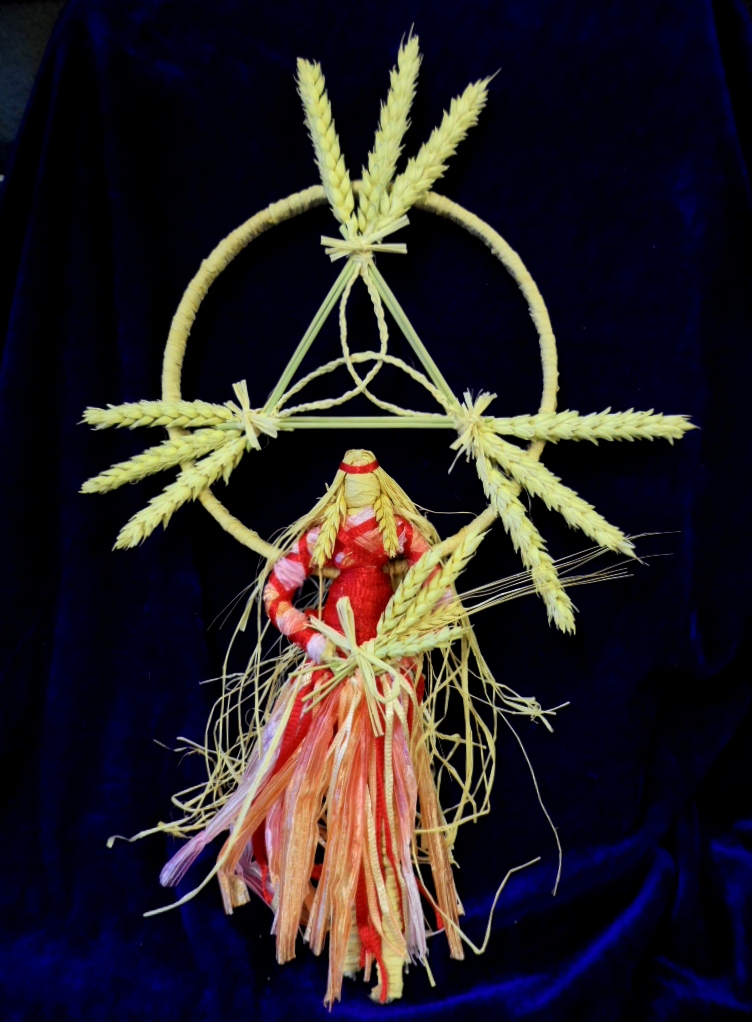
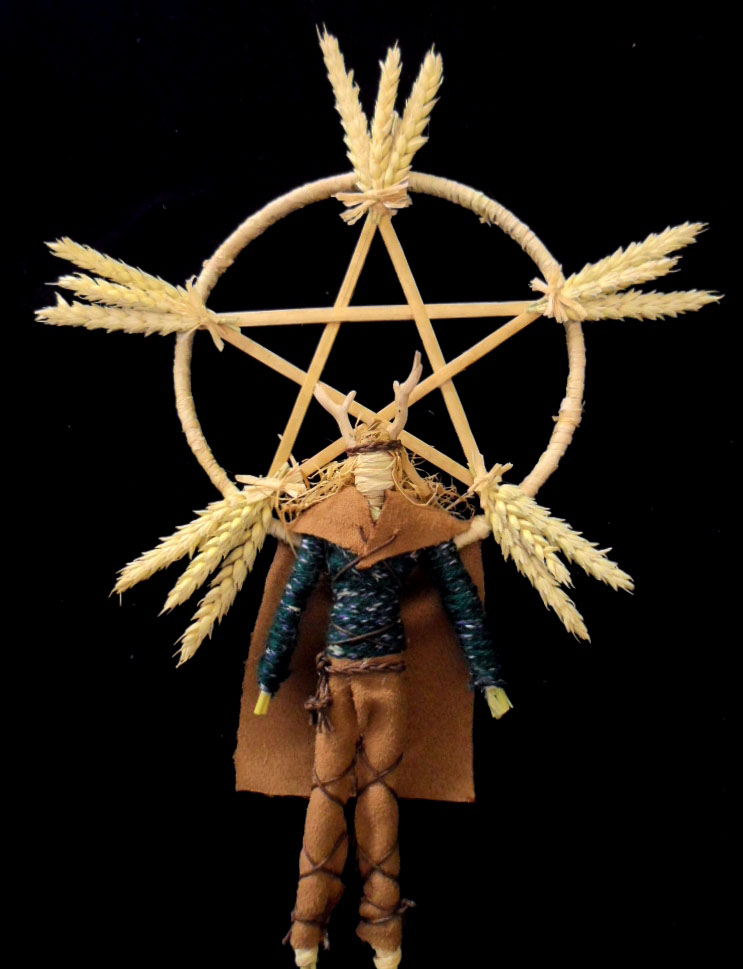
File:Contemporary male Corn dolly.jpg” by Mountainash333 is licensed under CC BY-SA 3.0.

I also like to make ‘Dollies’ out of flowers and grass, especially when I sat in a field doing my thanksgiving. Above is a very fancy Male Corn Dolly representing ‘The Harvest Father’ 

  1. Offering to the Land
    Making offerings to the land is a way to give thanks and honor the earth. You can offer a portion of your harvested fruits, vegetables, or baked goods to the land. Simply find a special place in nature and leave your offering with a prayer of gratitude.
  1. Reflection and Gratitude Ritual
    Lammas is a time for reflection and gratitude. Set aside time to meditate on the past year’s growth and challenges. Write down what you are thankful for and what you hope to achieve in the coming months. Burn the paper as an offering, symbolizing the release of your intentions into the universe.

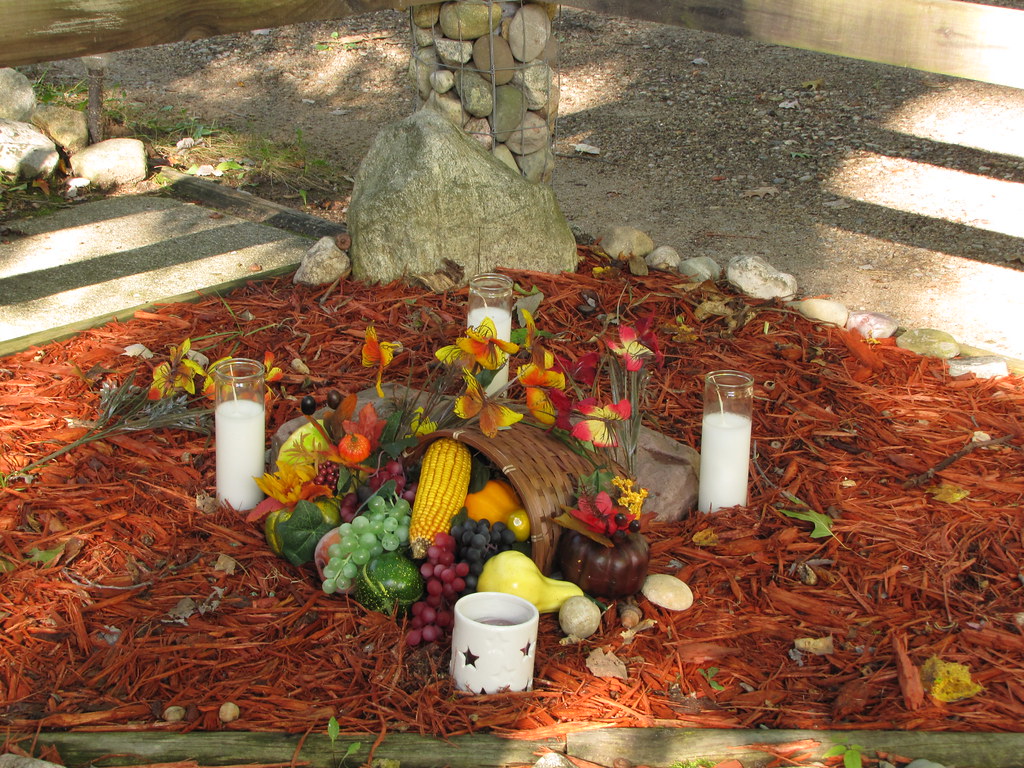
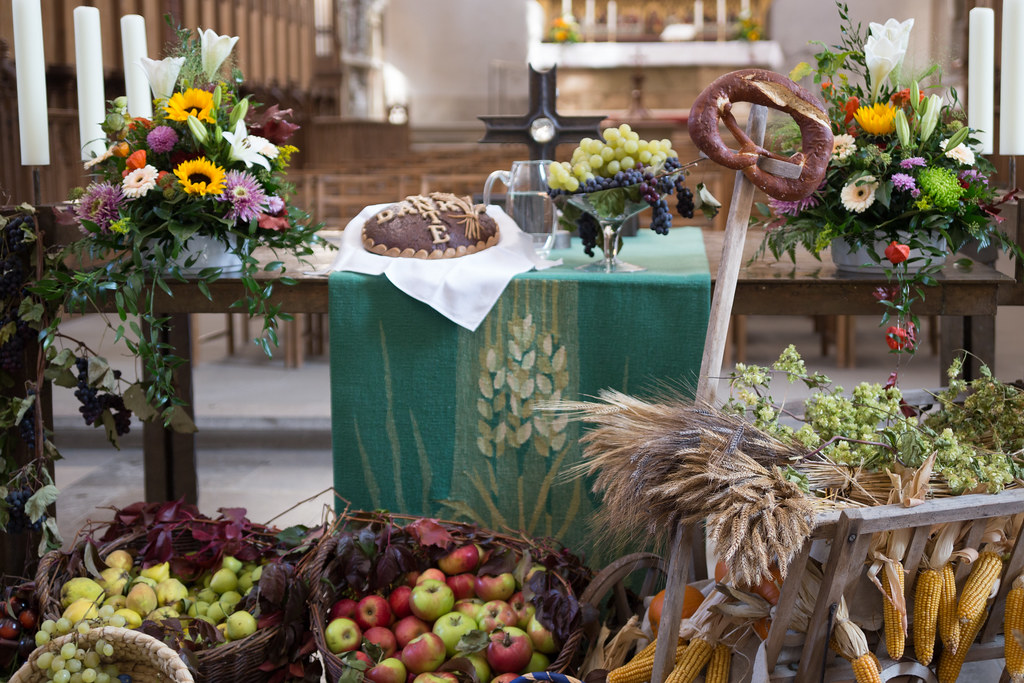
Mabon Altar 2012” by Pearl Photo is marked with Public Domain Mark 1.0.

Incorporating Lughnasadh / Lammas into Modern Life

While the traditional practices of Lammas are deeply rooted in agrarian life, they can be adapted to suit modern lifestyles. Here are some ideas for incorporating Lammas into your life, regardless of your living situation:

  1. Urban Celebrations
    Even if you live in an urban environment, you can celebrate Lammas by visiting a local farmers’ market and purchasing seasonal produce. Support local agriculture by buying fresh fruits, vegetables, and bread. As a London Dweller myself, I always try to find some green space (believe it or not there is some in London!) and take some time to sit and pay gratitude, and if able do a few wee rituals. Also, growing herbs and other things in window boxes and on balconeys is another great way to get your green witchcraft hat on!
  1. Gardening and Planting
    If you have a garden, use Lammas as a time to tend to your plants and reflect on the cycle of growth. Planting herbs or flowers that thrive in late summer can be a symbolic act of honoring the earth. If you are low energy, then just sitting in your garden or green space having a coffee can be just as sacred.
  1. Community Involvement
    Lammas is about community and sharing. Volunteer at a local food bank or community garden to give back to your community. Sharing your time and resources is a modern way to embody the spirit of the first harvest. I also like to go and feed the local crows in my park, and pick up any rubbish as I do so. Little things we do can have a huge impact.
  1. Creative Expressions
    Engage in creative activities that celebrate the themes of Lammas. Paint, write poetry, or create music inspired by the season’s abundance and the myth of Lugh. Creative expression can be a powerful way to connect with the festival’s energy. I love to have a bit of a dance and sing song (rather badly I may add but it’s still bloody fun so why not?!)

Do you celebrate Lughnasadh or Lammas? If so let us know below or via our social channels as we love to hear from you and share our practices. 

Like this article? Why not sign up to our newsletter and or social channels? We love to hear from you! 

@Bunnypudding (Tiktok) / @Bunnyscopes (Instagram)

Ems xX

References

Profile Image: “File:A Contemporary Goddess of the corn . Corn Mother.JPG” by Rowan Duxbury is licensed under CC BY-SA 3.0

Hutton, Ronald. The Stations of the Sun: A History of the Ritual Year in Britain. Oxford University Press, 1996.

Pennick, Nigel. The Pagan Book of Days: A Guide to the Festivals, Traditions, and Sacred Days of the Year. Destiny Books, 1992.

Farrar, Janet and Stewart. Eight Sabbats for Witches. Robert Hale, 1981.

Grimm, Jacob. Teutonic Mythology. George Bell and Sons, 1883.

MacNeill, Máire. The Festival of Lughnasa: A Study of the Survival of the Celtic Festival of the Beginning of Harvest. Oxford University Press, 1962.

Lughnasadh and Lammas – What’s the Difference? A Very Concise History of the Celtic and Anglo Saxon Nations

We explain what the Celtic Nations are and what the difference between Lughnasadh and Lammas. Snazzy, eh?

Hello Coven, me again, what can I say, I am NEEDY for your love and most likely in the middle of a hyper fixation….You’re welcome! Anyhow, further to my earlier post on Lughnasadh and Lammas I wanted to share a post I wrote for an upcoming project I am working on (around Celtic Heritage….eiiii) about the variance between the two festivals. The British Isles has a fascinating history featuring a mix of cultures including Celtic, Anglo Saxon, Norse (Yip, they get around everywhere, bless ‘em),Norman and even blooming the fabulous cultures that the Roman army brought over, we certainly have a multi-cultural vibe going on. So I just wanted to add a bit more nuance to variance between the festivals historically. 

Firstly, what are the celtic nations? 

File:Map of Celtic Nations-flag shades.svg” by QuartierLatin1968 is licensed under CC BY-SA 3.0.

The Celtic Nations

The Celtic nations are regions in Western Europe where Celtic languages and cultural traditions have endured. There are six recognised Celtic nations:

  1. Ireland (Éire) [Green] Aka Emma’s Mother Land ❤
    • Language: Irish Gaelic (Gaeilge)
    • Highlights: Rich traditions in music, dance, and folklore. Historical sites like the Hill of Tara reflect its ancient Celtic roots.
  2. Scotland (Alba) [Blue] Aka Ajs Mother Land 
    • Language: Scottish Gaelic (Gàidhlig)
    • Highlights: Famous for wild haggis, bagpipes, kilts, and Highland games. The language is spoken in the Highlands and the Western Isles, with historical sites like the Callanish Stones. 
  3. Wales (Cymru) [Red] 
    • Language: Welsh (Cymraeg)
    • Highlights: Known for male voice choirs and the Eisteddfod festival. The beautiful Welsh language is NOW widely spoken and taught especially in the north and west but this is only recently but let’s talk about colonisation in another post…. 
  4. Brittany (Breizh) [Black] 
    • Language: Breton (Brezhoneg)
    • Highlights: Located in northwest France, it features traditional music and dance (fest-noz). The Breton language is spoken by a minority, with megalithic sites like Carnac.
  5. Cornwall (Kernow) [Yellow]
    • Language: Cornish (Kernewek)
    • Highlights: Situated in southwestern England, known for mining, fishing, and folklore. The language, like Welsh is experiencing a revival, with cultural sites like Tintagel Castle.
  6. Isle of Man (Mannin) [Mustard] 
    • Language: Manx Gaelic (Gaelg)
    • Highlights: The island has a unique Celtic and Norse heritage, with traditional music and the annual Tynwald Day ceremony. Manx Gaelic is being revived through education.

Other Regions with Celtic Influence

  • Galicia and Asturias (Spain): These regions have significant Celtic cultural elements, especially in music and dance.

And finally England [White]: 

Why England Isn’t a Celtic Nation (Explained Politely)

While certain regions of England, such as Cornwall, have Celtic roots, England as a whole is not considered a Celtic nation. This is due to the significant Anglo-Saxon and Norman influences that have shaped its cultural and linguistic identity, overshadowing the earlier Celtic heritage. The predominant language and cultural practices in England evolved separately from the distinct Celtic traditions maintained in the recognised Celtic nations.

Union of Nations Celtics

Combined flag of the Celtic nations” by BzhSamTheRipper is licensed under CC BY-SA 3.0.

Ok, phew – let’s get to the festival variances between the festival and a detailed comparison of the two:

Lughnasadh:

Origins and Etymology

  • Celtic Festival: Lughnasadh is rooted in ancient Celtic tradition. The name Lughnasadh (pronounced “Loo-nah-sah”) is derived from the god Lugh, a prominent deity in Celtic mythology, and “nasadh,” which means assembly.
  • Mythological Significance: Lughnasadh was established by Lugh to honor his foster mother, Tailtiu, who died from exhaustion after clearing the plains of Ireland for agriculture. It is a celebration of the harvest and a commemoration of Tailtiu’s sacrifice. Thanks Tailtiu!

Celebrations and Traditions

  • Feasting and Games: Central to Lughnasadh are communal feasts and athletic games, reflecting Lugh’s associations with skill and competition. These games included horse racing, wrestling, and various contests of strength and agility.
  • Religious Rituals: Offerings of the first fruits of the harvest were made to the gods, particularly to Lugh, to ensure continued fertility and abundance. Rituals often took place at sacred sites such as hilltops and stone circles.
  • Craftsmanship: As Lugh was a god of many talents, craftsmanship and artistic skills were celebrated. Exhibitions and competitions in various crafts were held, showcasing the community’s talents.
  • Fire Festivals: Bonfires were lit as part of the festivities, symbolising purification and the power of the sun. The Celts love a fire festival, and celebrate 4 year. Nice.

Cultural Context

  • Irish and Scottish Heritage: Lughnasadh is primarily celebrated in regions with strong Celtic heritage, such as Ireland and Scotland. It has deep roots in the agricultural calendar and the Celtic mythology of these areas.

Lúgh Láimh Fada == Lu of the Long Hands” by Liamfm . is licensed under CC BY-SA 2.0.

Lammas

Origins and Etymology

  • Anglo-Saxon Festival: Lammas, from the Old English “hlafmaesse,” translates to “loaf mass.” It was a Christian festival that marked the blessing of the first loaf of bread made from the new wheat crop.
  • Christian Integration: As Christianity spread through the British Isles, Lammas became integrated into the Christian liturgical calendar. It was a time to give thanks to God for the first fruits of the harvest and to bless the bread made from the new grain.

332 Lammas Festival” by Trinity Trees is licensed under CC BY-SA 2.0.

Celebrations and Traditions

  • Blessing of Bread: The primary ritual of Lammas involved baking a loaf of bread from the first harvested grain and taking it to church to be blessed. This act symbolized gratitude for the harvest and the provision of daily bread.
  • Feasting and Community Gatherings: Similar to Lughnasadh, Lammas involved communal feasting and sharing of the harvest’s bounty. It was a time for communities to come together and celebrate the season’s abundance.
  • Agricultural Customs: In addition to the religious aspects, Lammas was also marked by various agricultural customs, such as the reaping of the first wheat and the preparation of fields for the next planting season.

Cultural Context

  • Medieval and Early Modern England: Lammas was widely celebrated in medieval and early modern England. It reflects the integration of pagan harvest festivals into the Christian tradition, demonstrating the adaptability and syncretism of religious practices during this period.

Comparison and Modern Celebrations

Common Themes

  • Harvest Celebration: Both Lughnasadh and Lammas celebrate the beginning of the harvest season, giving thanks for the first fruits and acknowledging the hard work of the agricultural cycle.
  • Community and Feasting: Communal meals and gatherings are central to both festivals, fostering a sense of community and shared gratitude.

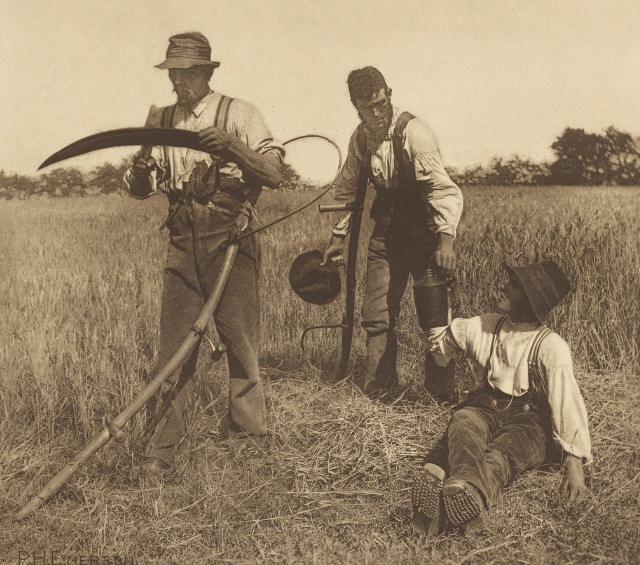
Barley-Harvest. [Suffolk.] Peter Henry Emerson” by J. Paul Getty Museum is marked with CC0 1.0.

Differences in Focus

  • Deity vs. Christian Context: Lughnasadh is specifically tied to the Celtic god Lugh and his mythological significance, whereas Lammas is a Christianized festival focusing on the blessing of bread and the harvest.
  • Cultural Origins: Lughnasadh has its roots in Celtic traditions and is primarily associated with Ireland and Scotland. Lammas, on the other hand, is an Anglo-Saxon festival that became integrated into Christian practices in England.

Modern Celebrations

  • Neo-Pagan Practices: Many modern Neo-Pagans celebrate Lughnasadh by incorporating traditional Celtic rituals, such as crafting corn dollies, baking bread, and holding feasts and games. These practices honor the historical roots and the god Lugh.
  • Wiccan Sabbats: In Wiccan tradition, both Lughnasadh and Lammas are celebrated as one of the eight Sabbats in the Wheel of the Year. Wiccans might blend elements of both traditions, focusing on harvest themes, gratitude, and community.
  • Mordern Witches: Many witches follow the wheel of the year but don’t have associations with any deities and in some cases are antheist but include elements of the celebrations in their practices (Again, hello fwends!)
  • Contemporary Christian Observance: Some Christian communities continue to observe Lammas with the blessing of bread and thanksgiving services, maintaining the festival’s historical Christian elements.

Harvest Altar” by allynfolksjr is licensed under CC BY 2.0.

So there you have it! While Lughnasadh and Lammas share common themes of harvest and gratitude, they originate from distinct cultural and religious traditions. Lughnasadh is deeply rooted in Celtic mythology and the veneration of the god Lugh, while Lammas has its origins in Anglo-Saxon Christian practices centered around the blessing of the first bread. Both festivals, however, offer rich traditions and practices that celebrate the abundance of the earth and the importance of community.

Like this article? Why not sign up to our newsletter and or social channels? We love to hear from you! 

@Bunnypudding (Tiktok) / @Bunnyscopes (Instagram)

Ems xX

References

Featured image: “The grass bends, the oak breaks (harvest series)” by Rising Damp is licensed under CC BY 2.0.

Hutton, Ronald. The Stations of the Sun: A History of the Ritual Year in Britain. Oxford University Press, 1996.

Pennick, Nigel. The Pagan Book of Days: A Guide to the Festivals, Traditions, and Sacred Days of the Year. Destiny Books, 1992.

Farrar, Janet and Stewart. Eight Sabbats for Witches. Robert Hale, 1981.

Grimm, Jacob. Teutonic Mythology. George Bell and Sons, 1883.

MacNeill, Máire. The Festival of Lughnasa: A Study of the Survival of the Celtic Festival of the Beginning of Harvest. Oxford University Press, 1962.

The Celtic Celebration of Lughnasadh and the God Lugh

Its all Live, Laugh, Lugh! in todays post as we explore The Celtic Celebration of Lughnasadh and it’s name sake, the God Lugh

Three times a charm today Coven! As a bit of a teaser for a project that I am working on, here is a little explainer into the Celtic God Lugh and Lughnasadh, any questions or queries please let me know…but let’s dive in shall we?

Lughnasadh holds a significant place in the Celtic tradition as one of the four major fire festivals, along with Imbolc, Beltane, and Samhain. Celebrated on August 1st, Lughnasadh marks the beginning of the harvest season and is named after the god Lugh, a prominent figure in Celtic mythology.

The Celtic Celebration of Lughnasadh

The ancient Celts had a deep connection to the cycles of nature, and their festivals reflected the agricultural rhythms of their lives. Lughnasadh was no exception and was celebrated with a variety of customs that honored the harvest, fostered community ties, and paid homage to Lugh.

Feasting and Games
Lughnasadh was a time of communal feasting, where people gathered to share the bounty of the first harvest. These feasts included freshly baked bread, seasonal fruits, and other agricultural products. Sharing food was a way to strengthen community bonds and express gratitude for the earth’s abundance.
Athletic games and competitions were also a central feature of Lughnasadh celebrations. These games, often held in honor of Lugh, included feats of strength, speed, and skill. Horse races, wrestling matches, and various other contests showcased the talents and vitality of the community. These activities were not only a form of entertainment but also a way to honor the physical prowess and competitive spirit that Lugh represented.

    Crafts and Handiwork
    Craftsmanship was another important aspect of Lughnasadh. People would display their handiwork, including weaving, metalwork, and other crafts. This emphasis on skill and creativity was a tribute to Lugh, who was renowned for his multifaceted talents. Competitions and exhibitions of crafts were common, allowing individuals to showcase their abilities and receive recognition from their peers.

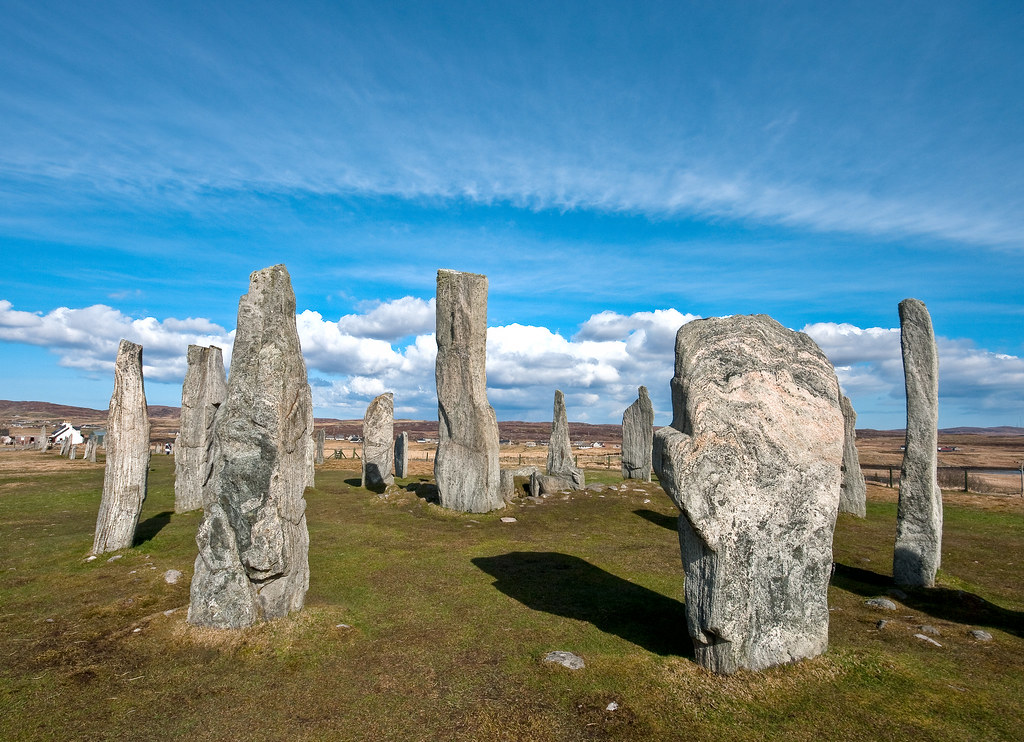
    Callanish Stone Circle” by Travels with a dog and a Camera 🙂 is licensed under CC BY 2.0.

    Religious Ceremonies and Offerings
    Religious rituals were integral to the celebration of Lughnasadh. These ceremonies often took place at sacred sites such as hilltops, stone circles, and other natural landmarks. Offerings of the first fruits of the harvest, particularly grain, were made to the gods to ensure continued fertility and abundance. These offerings might include loaves of bread, freshly harvested grains, and other symbolic items.
    Bonfires were also lit during Lughnasadh, serving as a focal point for communal gatherings and rituals. Fire, a symbol of purification and transformation, played a crucial role in Celtic festivals. People might dance around the bonfires, leap over the flames for luck, and use the fire’s energy to bless their homes and fields.

    Cultural and Social Activities
    Lughnasadh was not only a religious and agricultural festival but also a cultural and social event. Storytelling, music, and dance were integral parts of the celebrations. Bards and poets would recite tales of heroes, gods, and the land, reinforcing the cultural heritage and values of the community. Music and dance brought people together, fostering a sense of unity and joy. Any excuse for a party, eh? Anyway whilst y’all here *Pulls out my poetry notes and clears throat* There was once a woman from Stoke, who got something caught…

      Lúgh Láimh Fada == Lu of the Long Hands” by Liamfm . is licensed under CC BY-SA 2.0.

      Lugh: The Multifaceted Celtic God

      Lugh, pronounced “Loo-g” and in is one of the most revered deities in Celtic mythology. Known by various epithets such as Lugh Lámhfhada (Lugh of the Long Arm) and Samildánach (Skilled in All Arts), Lugh’s character and deeds are central to the themes of Lughnasadh.

      Origins and Mythology
      Lugh is a member of the Tuatha Dé Danann, a race of supernatural beings in Irish mythology. His parentage is a mix of the divine and the mortal (Dude, same!) as he is the son of the god Cian and the Fomorian princess Ethniu. This union symbolises the bridging of different worlds and the integration of diverse qualities within Lugh.
      One of the most famous myths involving Lugh is his entry into the court of King Nuada at Tara. According to the story, Lugh approached the gates of Tara seeking entry, but the doorkeeper refused him, stating that only those with a special skill were allowed in. Lugh then listed his numerous skills, including warrior, poet, harpist, blacksmith, and physician, among others. When the doorkeeper was unable to find anyone who possessed all these skills, Lugh was admitted and became a prominent figure at Tara. Safe to say, I am taking the vibes of Lugh with me next time I try to get into a west London Club (I am joking, I’d rather eat my own head then go to West London club but you get what I mean)

        Attributes and Symbolism
        Lugh is often associated with the sun and light, embodying the qualities of illumination, clarity, and inspiration. His long arm signifies his far-reaching influence and his ability to extend his power and protection over his followers.
        As a god of many talents, Lugh represents excellence and mastery in various fields. This aspect of his character encourages individuals to develop their skills and talents to their fullest potential. Lugh’s multifaceted nature also symbolises versatility and adaptability, important traits for survival and success in both personal and communal life.

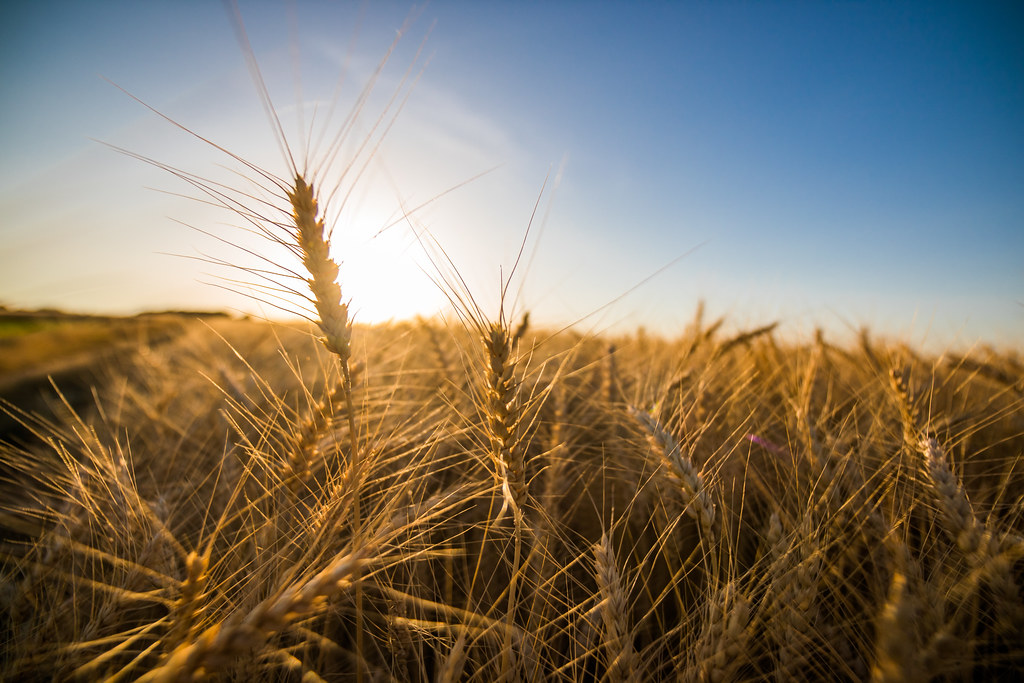
        Golden wheat before the harvest with the setting sun in the background” by Ivan Radic is licensed under CC BY 2.0.

        Warrior and Protector
        Lugh is also celebrated as a fierce warrior and a protector of his people. He played a crucial role in the Second Battle of Mag Tuired, where the Tuatha Dé Danann fought against the oppressive Fomorians. Lugh’s leadership and combat skills were instrumental in securing victory for his people, highlighting his role as a defender of justice and freedom.

        Patron of Arts and Crafts
        The Celts are very creative and poetic people and so Lugh’s association with arts and crafts makes him a patron of creativity and innovation. His festival, Lughnasadh, reflects this through the emphasis on games, crafts, and competitions. Lugh inspires individuals to strive for excellence and to take pride in their achievements, fostering a culture of creativity and continuous improvement. Sigh, isn’t he dreamy?

          Modern Laghnasadh Interpretation and Celebration

          While the ancient Celts had specific customs and rituals for Lughnasadh, modern practitioners of Celtic spirituality and Neo-Paganism (Hiya Friends!) have adapted these traditions to fit contemporary lifestyles. Here are some ways to celebrate Lughnasadh today, drawing on the spirit of the ancient festival but as always, take what works and make your practice yoru own (Respectfully of course):

          Host a Harvest Feast
          Gather friends and family for a meal that celebrates the first fruits of the harvest. Include dishes made from seasonal produce and freshly baked bread. Sharing food and stories can recreate the communal atmosphere of ancient Lughnasadh feasts. If there is one thing I can say about my celtic friends and family is that we don’t any excuse to have a wee shin dig so by all means have a mini feast every week if you want!

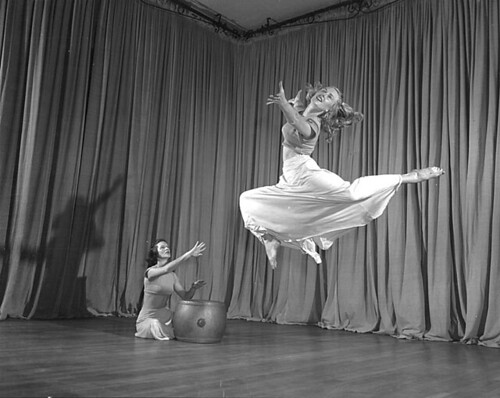
            Women’s interpretive dance class” by uwdigitalcollections is licensed under CC BY 2.0.

            Engage in Creative Activities
            Honor Lugh by engaging in a creative project, whether it’s crafting, writing, painting, or playing music. Showcase your skills and appreciate the talents of others in your community. Yes, social media and blog posts can be classed as creative exploits…this is a digita coven after all, would I say anything different?

              Participate in Athletic Games
              Organise or participate in athletic competitions or outdoor activities. Whether it’s a friendly race, a game of skill, or a hike, physical activity can connect you to the spirit of Lughnasadh and the energy of Lugh. I personally just go for a walk, as I don’t think I’ve ran since 2017 and I am fine with that. If you don’t or can’t do any athletic actvities why not watch the olympics this year or go and watch people play sports (again, respectfully…)

                Offerings and Rituals
                Create an altar with symbols of the harvest, such as grains, fruits, and flowers. Light candles and make offerings to Lugh and the earth. Express gratitude for the abundance in your life and set intentions for the coming season. I like to meditate as I light my candle at my alter, of course, make sure everything is fire safe yadda yadda…

                  Connect with Nature
                  Spend time outdoors, whether in a forest, a park, or your garden. Reflect on the cycles of nature and your place within them. Meditate, journal, or simply sit quietly to absorb the beauty and energy of the natural world.

                  And remember, Live, Laugh, Lugh!

                  Like this article? Why not sign up to our newsletter and or social channels? We love to hear from you! 

                  @Bunnypudding (Tiktok) / @Bunnyscopes (Instagram)

                  Ems xX

                  References

                  Profile Image: “File:Contemporary male Corn dolly.jpg” by Mountainash333 is licensed under CC BY-SA 3.0.

                  Hutton, Ronald. The Pagan Religions of the Ancient British Isles: Their Nature and Legacy. Wiley-Blackwell, 1993.

                  MacNeill, Máire. The Festival of Lughnasa: A Study of the Survival of the Celtic Festival of the Beginning of Harvest. Oxford University Press, 1962.

                  Freeman, Philip. Warriors and Druids: The Sacred World of the Celts. Pegasus Books, 2006.

                  Green, Miranda. Celtic Myths. University of Texas Press, 1995.

                  Ellis, Peter Berresford. The Mammoth Book of Celtic Myths and Legends. Running Press, 2002.

                  https://www.worldhistory.org/Lugh/

                  https://en.wikipedia.org/wiki/Lugh

                    What is the Summer Solstice: A Witch’s Celebration

                    The Summer Solstice, known as Litha, marks the longest day and shortest night of the year. Here’s everything you need to know!

                    Hello Coven, Emma here! Today is the Summer Solstice, and I  wanted to answer some of the most commonly asked questions about the solstice. If you wish to learn more about the Witches Wheel of Year, check out AJs post which goes in depth. 

                    The special thing about this year’s Solstice is that it happens around a Full Moon in Sagittarius, when the moon is at 100% visibility on the 21st June 2024 . Check out my post on how to make Moon Water and 20 Versatile Ways to use Moon Water if you wish to superpower your moon water rituals over this period – make sure to share your results on social media, as we love to see your spell work!

                    Solstice Dawn” by tarotastic is licensed under CC BY 2.0.

                    Understanding the Summer Solstice

                    The Summer Solstice, also known as Litha or Midsummer, is a momentous event in the wheel of the year (see link above), marking the longest day and the shortest night. Occurring between June 20th and 22nd, it is a time when the sun is at its zenith, directly over the Tropic of Cancer. This astronomical phenomenon has been celebrated for millennia, symbolising the peak of light, abundance, and the powerful energy of the sun. 

                    The Solstice in UK History

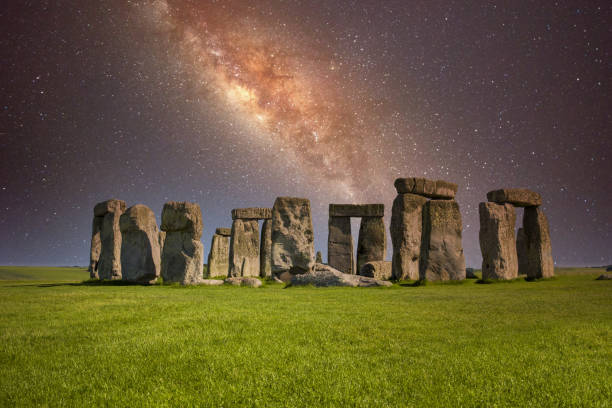
                    In the UK, the Summer Solstice holds a significant place in history and culture. Ancient monuments like Stonehenge and Avebury align perfectly with the solstices, suggesting their importance to our ancestors. These stone circles were likely used for ceremonial and astronomical purposes, celebrating the sun’s life-giving energy. I’ve yet to see them myself but I am certainly planning a visit soon. Some witches and Pagans go and visit these monuments during the Solstice as part of their worship. 

                    Historically, the Summer Solstice was a time for community gatherings, feasting, and merriment. Bonfires were lit to honour the sun and its power. These fires were believed to protect against evil spirits and ensure a bountiful harvest. The solstice was also a time for lovers, with midsummer’s eve considered auspicious for romance and marriage. Oh er! 

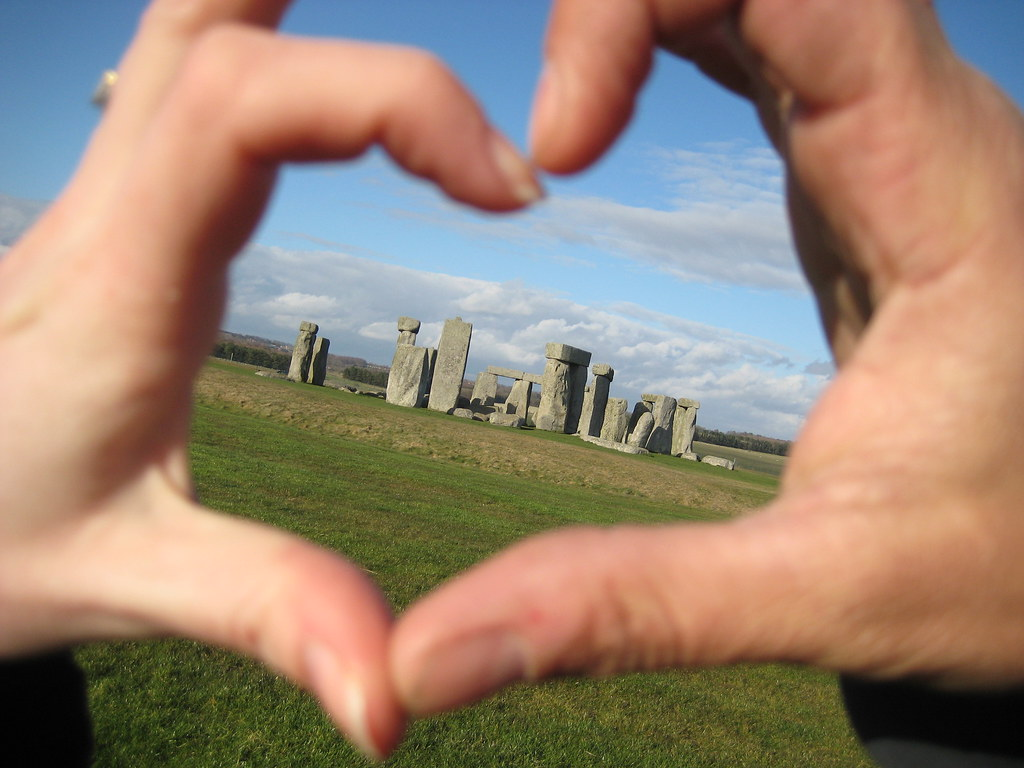
                    Stonehenge Heart” by Jose and Roxanne is licensed under CC BY 2.0.

                    The Summer Solstice in Witchcraft Practices

                    For witches, the Summer Solstice is a powerful sabbat that celebrates the sun at its peak and the life force it embodies. It is a time to honour the Earth’s abundance, embrace the light within ourselves, and prepare for the waning year ahead. Litha rituals and celebrations often incorporate themes of light, growth, and the balance between fire and water.

                    I like to use it as a period to take stock of the start of the year, make adjustments or have celebrations for my areas of growth  and use it as a time to plan my next steps and make adjustments. 

                    How Witches Celebrate the Summer Solstice

                    Rituals and Ceremonies

                    1. Sunrise Rituals: Begin your solstice celebration by greeting the sunrise. Find a quiet, natural spot to witness the dawn. As the sun rises, meditate on its light, warmth, and energy, feeling it infuse your spirit. No garden or park? No worries, you can do this by a window or anywhere you can get natural light. I do this daily in my bathroom as it’s always facing the sun as I get ready in the morning. 
                    2. Creating an Altar: Now not all witches need Altars but if you are that way inclined decorate your altar with symbols of the sun and summer. Use candles, sunflowers, seashells, and crystals like citrine and amber. Incorporate fresh herbs such as St. John’s Wort, chamomile, and lavender. Add representations of the elements – a bowl of water, a feather, a stone, and a candle. Have fun foraging and remember to be respectful! 
                    3. Bonfire Magic: Light a bonfire or a simple candle to honour the sun. Write down intentions or things you wish to release on small pieces of paper and burn them in the fire, symbolising transformation and purification. Make sure to practise fire safety etc. 
                    4. Herbal Offerings: Collect herbs and flowers associated with the solstice. Create small bundles or wreaths to offer to the earth or hang in your home for protection and prosperity.
                    5. Water Rituals: Balance the fire of the solstice with water. Visit a natural body of water – a river, lake, or ocean – and immerse yourself, symbolising cleansing and renewal. If you cannot visit a natural source, a ritual bath with added herbs and essential oils can be equally powerful.
                    6. Feasting and Community: Gather with friends or fellow witches for a solstice feast. Prepare dishes using fresh, seasonal produce. Share stories, songs, and dances around the bonfire, celebrating the community and the abundance of the season. Why not use some magickal stocks in your recipes

                    Spring Valley Nature Walk 4” by H. Michael Miley is licensed under CC BY-SA 2.0.

                    Ways to Celebrate the Solstice

                    1. Nature Walks: Spend time in nature, appreciating the peak of summer. Collect natural items like stones, feathers, and flowers to use in your rituals or as offerings. I’ll sharing some of mine over on Tiktok if you wish to join me
                    2. Crafting Talismans: Create talismans or amulets from natural materials. Infuse them with your intentions for protection, prosperity, or love. I love making poppets out of field grass. 
                    3. Meditation and Reflection: Reflect on the year so far and set goals for the remaining months. Meditate on the balance between light and dark, growth and decline.
                    4. Gardening: Engage with the earth by tending to your garden. Plant new seeds, nurture existing plants, and harvest herbs for your magical practices.
                    5. Reading and Learning: Use this time to expand your knowledge of solstice traditions and witchcraft practices. Read books, attend workshops, or join online communities to share insights and experiences.

                    Are you celebrating Litha or the Summer Solstice? If so let us know below and via our social channels as we love to share with the wider witch community. 

                    Have the BEST Solstice, until next time, darlings! 

                    Ems xX

                    @Bunnypudding (Tiktok) / @Bunnyscopes (Instagram)

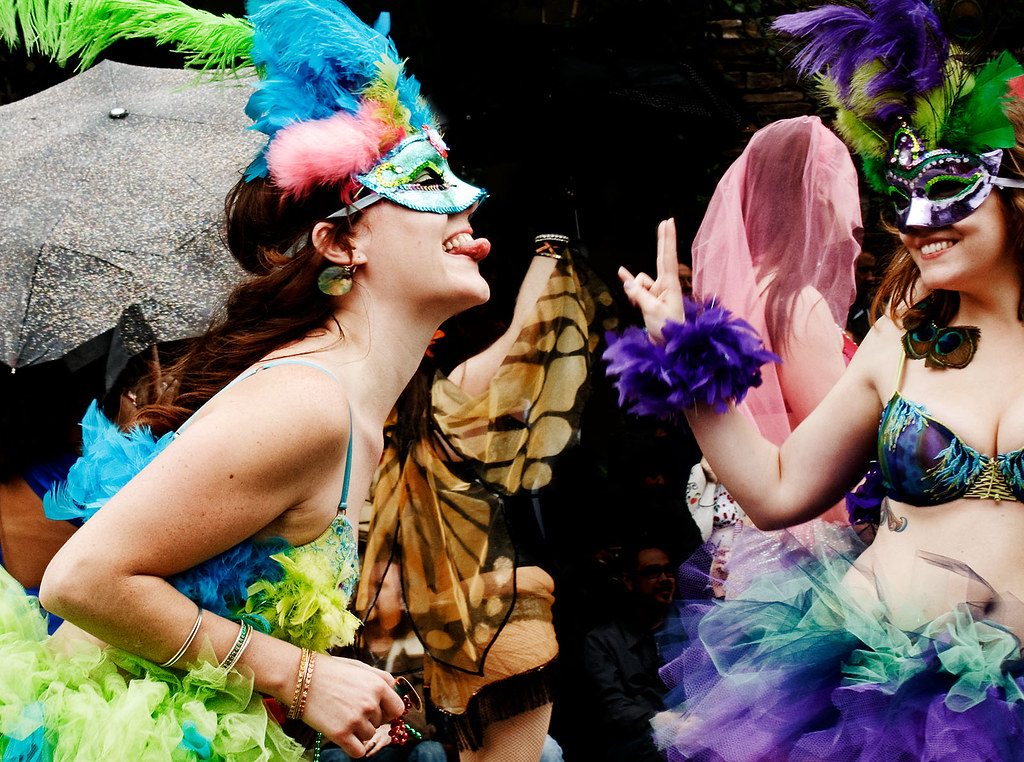
                    Profile picture source: “Fremont Summer Solstice Parade 2010” by .curt. is licensed under CC BY 2.0.

                    Pumpkin Spice Magic: A Delectable Blend of History, Folklore, and Witchcraft

                    We’re exploring the history of pumpkin spice, its intriguing ties to witchcraft, and how it’s become an essential part of our seasonal rituals

                    Spooky Season: It’s that time again. 

                    As the crisp winds of autumn sweep through the land, a familiar aroma fills the air, beckoning us with its warm, comforting embrace. It’s the enchanting scent of pumpkin spice, a blend that transcends the boundaries of flavors and invokes the essence of Autumn and mania in shopping aisles. Today, we’re exploring the rich history of pumpkin spice, its intriguing ties to folklore and witchcraft, and how this magical mixture has become an essential part of our seasonal rituals and coffee orders.
                    The Origins of Pumpkin Spice:

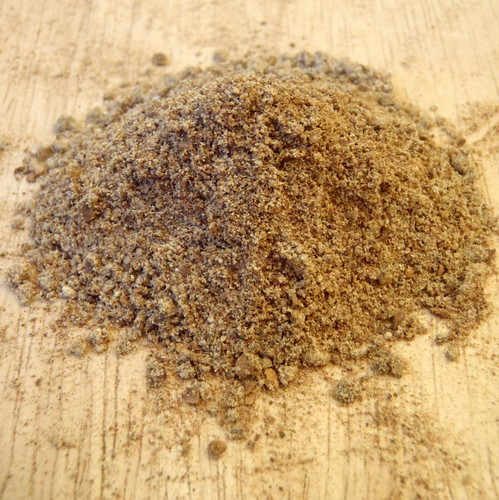
                    Pumpkin spice, that delightful combination of cinnamon, nutmeg, cloves, and ginger, traces its roots back to ancient civilizations. Spices like cinnamon and nutmeg were highly prized in ancient Egypt and India, not only for their culinary uses but also for their medicinal and mystical properties.

                    Pumpkin Spice: Folklore and Harvest Celebrations:

                    The association between pumpkin spice and folklore can be traced to the autumn harvest festivals celebrated by various cultures. Pumpkins, as a quintessential fall crop, were often featured prominently in these celebrations. The spices used in pumpkin spice blends were believed to have protective and purifying qualities. In some traditions, these spices were sprinkled around homes to ward off malevolent spirits and ensure a bountiful harvest.

                    Pumpkin Spice” by joyosity is licensed under CC BY 2.0.

                    What is Pumpkin Spice?

                    Pumpkin spice, with its aromatic blend of cinnamon, nutmeg, cloves, and ginger, is more than just a popular flavor of the colder seasons. For witches, it holds a special place in their magical arsenal. Let’s explore the magical properties of the ingredients in pumpkin spice and why it’s a beloved staple in the witch’s pantry.

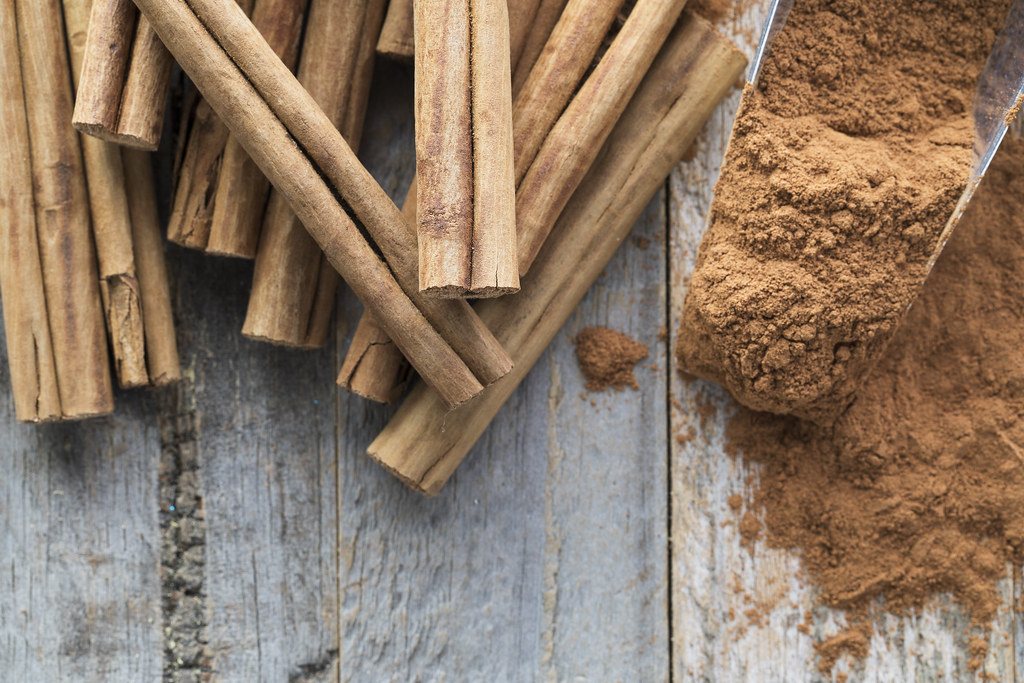
                    Cinnamon: Fire of Passion and Protection:

                    Cinnamon, a key component of pumpkin spice, is associated with the element of fire, making it a potent ingredient in magical practices. Its magical properties include:

                    • Passion and Love: Cinnamon is known for kindling the flames of passion and enhancing love spells. It can help rekindle the spark in relationships or attract new romance.
                    • Protection: Cinnamon is also used for protective magic, creating a barrier against negative energies and malevolent forces.
                    • Abundance: Cinnamon can be used to bring about abundance and encourage wealth. . Many believe cinnamon has a very high spiritual/energetic vibrations that attract luck
                    Cinnamon” by Kjokkenutstyr.net is licensed under CC BY-SA 2.0.

                    Nutmeg: Enhancing Psychic Abilities:

                    Nutmeg, another integral spice in pumpkin spice, is linked to psychic abilities and spiritual insight:

                    • Psychic Enhancement: Witches use nutmeg to boost their psychic abilities, making it a valuable tool for divination, meditation, and dream work.
                    • Clarity and Wisdom: Nutmeg is believed to enhance mental clarity, aiding in decision-making and deepening one’s understanding of complex matters.

                    Cloves: Banishing Negativity and Purification:

                    Cloves, with their sharp and pungent aroma, serve as powerful tools for witches:
                    • Banishing Negativity: Cloves are often used in banishing spells to remove negative influences, energies, or entities from one’s life.
                    • Purification: They are also employed for purification rituals, cleansing spaces or objects of unwanted energies.

                    Ginger: Empowering and Energizing:

                    Ginger, the final element in the pumpkin spice blend, brings its own unique qualities to magical practices:

                    • Energy and Power: Ginger is known for boosting personal power and vitality. Witches use it to infuse their spells with added energy and determination.
                    • Success and Prosperity: It’s also associated with success and prosperity, making it a favored ingredient in abundance rituals.

                    Pumpkin Spice Frappuccino” by llorias is licensed under CC BY 2.0.

                    How Witches Use Pumpkin Spice:

                    Witches have long appreciated the power of herbs and spices in their magical practices. Pumpkin spice, with its warm and grounding properties, is a favorite among modern witches for several reasons:

                    Seasonal Connection: Pumpkin spice is closely tied to the autumn season when the veil between worlds is believed to be thin. It aligns with the earthy, grounding energies of Autumn, making it an ideal addition to spells and rituals during this time.

                    Harmony and Balance: The spices in pumpkin spice, individually and collectively, promote balance, harmony, and warmth. Witches use it to create a harmonious atmosphere in their homes and rituals.

                    Transformation and Transition: Autumn is a season of change, and pumpkin spice embodies the transformative energy of this season. Witches utilise it to facilitate personal growth and navigate life’s transitions.

                    Connection with Ancestors: Pumpkin spice’s popularity during holidays like Samhain and Halloween also makes it a potent tool for connecting with ancestors and spirit guides.

                    Comfort and Hearth Magic: The warm, comforting scent of pumpkin spice can create a cozy atmosphere conducive to meditation, divination, or simply relaxing by the hearth.

                    Protection and Purification: Individual spices within pumpkin spice, such as cinnamon and cloves, are known for their protective and purifying qualities, making them valuable tools in warding off negative energies.

                    Enhancing Psychic Abilities: Nutmeg, another component of pumpkin spice, is associated with enhancing psychic abilities and intuition, making it a valuable addition to divination practices.

                    Further Uses For Pumpkin Spice:

                    Beyond its magical properties, pumpkin spice has become a beloved flavor of the Autumn season. From lattes to candles, this aromatic blend has permeated our daily lives and rituals. Here are a few lifestyle elements where pumpkin spice shines:

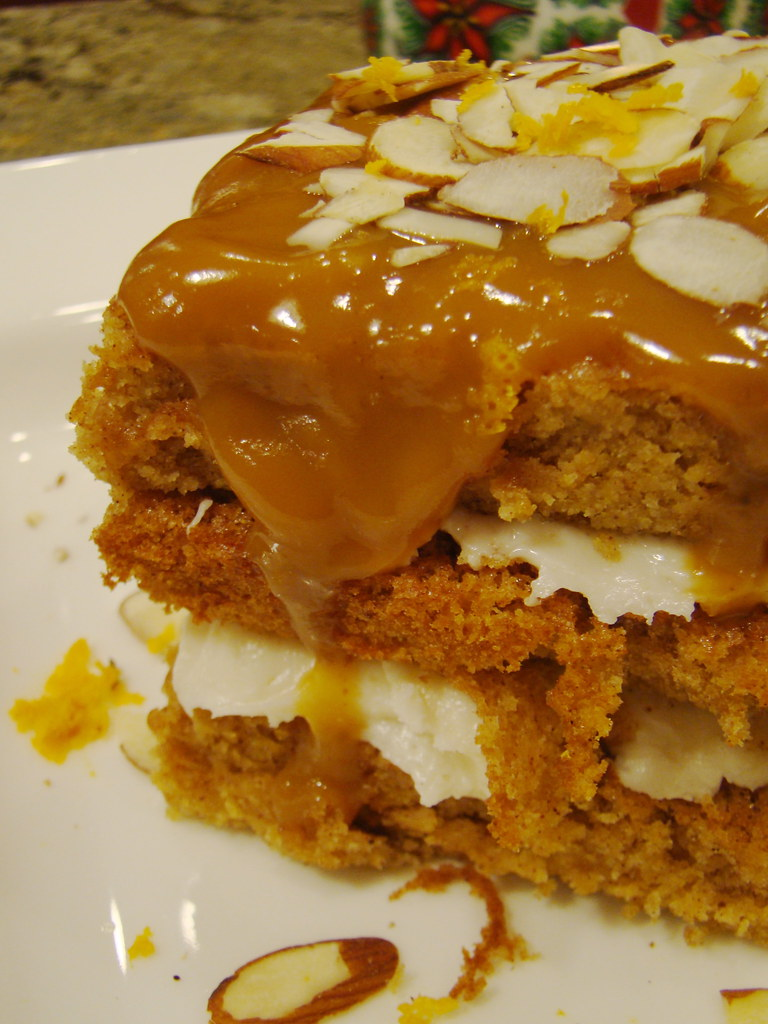
                    Spiced Pumpkin Cake with Citrus Cream Cheese Frosting Topped with Vegan Caramel” by Vegan Feast Catering is licensed under CC BY 2.0.

                    • Culinary Delights: Pumpkin spice finds its way into a wide array of dishes, from pies and muffins to soups and cookies. It’s a comforting and indulgent flavor that reminds us of the harvest season.
                    • Aromatherapy: Pumpkin spice-scented candles and essential oils offer a delightful way to infuse our homes with the cozy ambiance of Autumn.
                    • Self-Care Rituals: Many incorporate pumpkin spice into self-care routines, whether through homemade face masks, bath salts, or even as an ingredient in natural perfumes

                    Pumpkin spice, with its deep historical roots, ties to folklore, and its embrace by modern witches, has become a symbol of autumn’s magic. As you savor that pumpkin spice latte or light a pumpkin spice candle, remember the ancient wisdom and enchantment this delightful blend carries with it. Whether you’re indulging in a seasonal treat or infusing your witchcraft with its warm essence, pumpkin spice is a reminder that the magic of the season is always at hand.

                    Do you use or love Pumpkin spice? If so let us know below or via our social channels.

                    Until next time, darlings! 

                    Love, Ems 

                    @Bunnypudding (Tiktok) / @Bunnyscopes (Instagram)

                    Reference links:

                    Explore the history of spices and their significance

                    Learn about the folklore of autumn harvest celebrations

                    Discover the use of spices in witchcraft

                    Main Picture Credit: “Pumpkin Spice” by Theo Crazzolara is licensed under CC BY 2.0.

                    Witchcraft at work Interview with Joseph, creator of Money, Mindset & Strategy.

                    We interview Joseph, from coaching business called Money, Mindset & Strategy. We discuss coaching and empowering people to step into their power with money.

                    Bunnypudding (Emma) here, sorry we’ve been quiet for a few weeks, Coven. We’ve been doing huge life changes which has certainly kept us busy but we have loads of fabuous content coming up. Including work with the fabulous Joseph from MMS Strategy who we are interviewing in today’s Witchcraft at Work.

                    Take it away, Joseph!

                    First, tell us about yourself!

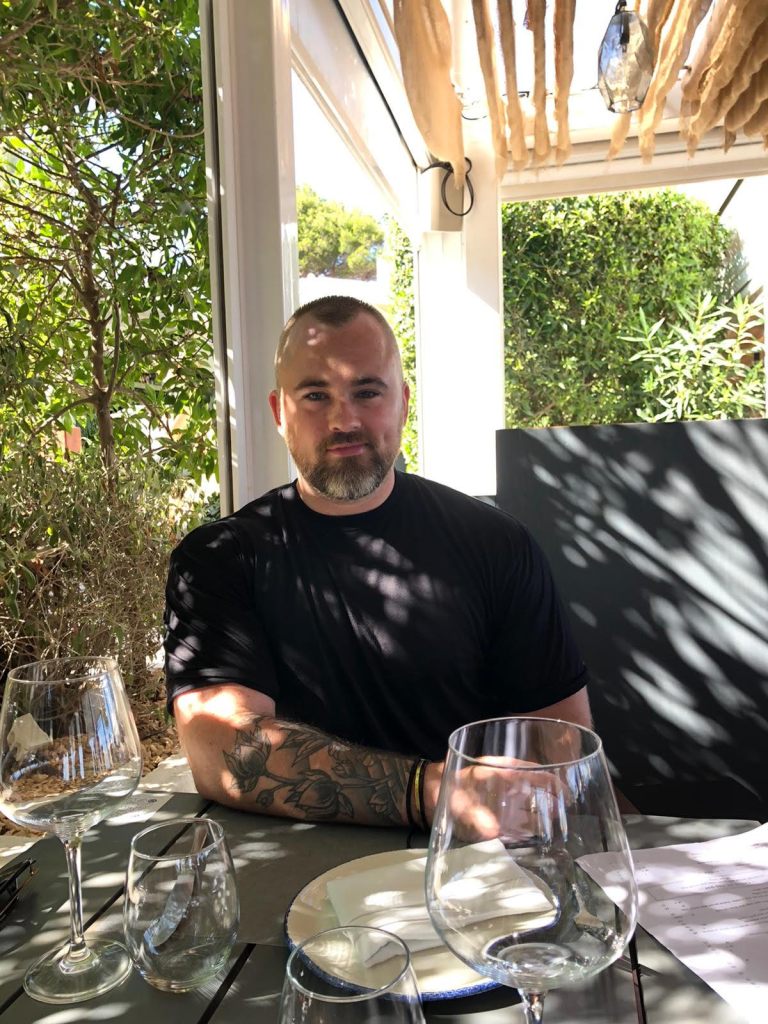
                    I’m Joseph, I live in Ibiza and run a coaching business called Money, Mindset & Strategy. I specialise in coaching and empowering my clients to step into their power with money, build wealth and get comfortable charging a lot more for their services. 

                    I host a podcast and run an online academy called MMS Academy. 

                    I love coaching on money because it affects almost every area of out lives and I believe it’s a reflection of our relationship with ourselves.

                    What is witchcraft to you?

                    I think it’s personal to everyone which is what makes it so beautiful and powerful. To me, witchcraft is using your own natural power, inner wisdom and intuition to create changes in your life that are meaningful for you. 

                    It gives you different things depending on what you need at that time in your life. Whether you are using your intuition to plan some next steps or tapping in to your personal power to manifest your goals or simply feeling calmer and more grounded, it’s all witchcraft. 

                    How do you use witchcraft in your day to day life?

                    It varies depending on what I need or am working on but I like to make sure I am always covering the basics of energetic cleansing, protection and gratitude. For me, those form the foundation of a strong spiritual or magical practice. 

                    I am also a huge fan of maintenance magick, rather than waiting for a problem before doing a spell, I think it;s really important to protect and appreciate the things in your life that are going really well. 

                    And professional life?

                    If I have a goal or intention I am working on, I will usually do a vision board around it and some candle spells. I have tried many forms of spell work and always see the most results from candle magick.

                    I also feel it;s really important to regularly study and learn so I make time every day for either reading or listening to material relating to magick or something I’m working on. 

                    I host a weekly mindset and coaching call as part of the Academy I run and before each class I set an intention and do a quick meditation to deliver messages that are helpful and empowering to everyone listening. I’ve done that with all of my work for years whether it;s writing a book, delivering a workshop or coaching a client in a 1 2 1 session, I always use the power of intention. 

                    How have you used witchcraft to support in shaping your career?

                    When I first started my coaching business, I created vision boards and did weekly candle spells to help manifest my goals. 

                    I also try and meditate most days and tune into my inner wisdom, I think this is a really under rated part of manifesting your goals. Its not just about setting the intention, it’s about understanding that you are the magick and that your actions are a beautiful and important part of the manifestation process. 

                    I tauge a course about magick a few years ago and something that kept coming to me during the writing of it was “magick works through you not just for you” so it’s important to always remember that the power is within you already, never outside of yourself. 

                    Does your work know about your practice?

                    I’m very open about my beliefs on my podcast and in my workshops, I also have quite a few magical looking tattoos on my arms so it’s definitely not a secret! .

                    Where can people find you?

                    You can check out my website and blog 

                    MMS Academy page

                    My podcast is called Money, Mindset & Strategy and is available across all platforms

                    I upload weekly coaching videos to my new YouTube channel 

                    You can check out the kindle collection on Amazon 

                    You can sign up for a free money mindset class and join my newsletter here 

                    If you’d like to know more about working together, you can email us on support@moneymindsetandstrategy.com to arrange a free consultation about your goals. 

                    Fabulous, Thanks Joseph!

                    And remember Coven, we love to hear about how you bring Witchcraft into your Work over on our social channels and the comments as well.

                    Win – A copy of ‘The Modern Craft’ & other goodies!

                    Ahhhhhh we are sooooo excited to share this with you, Coven!

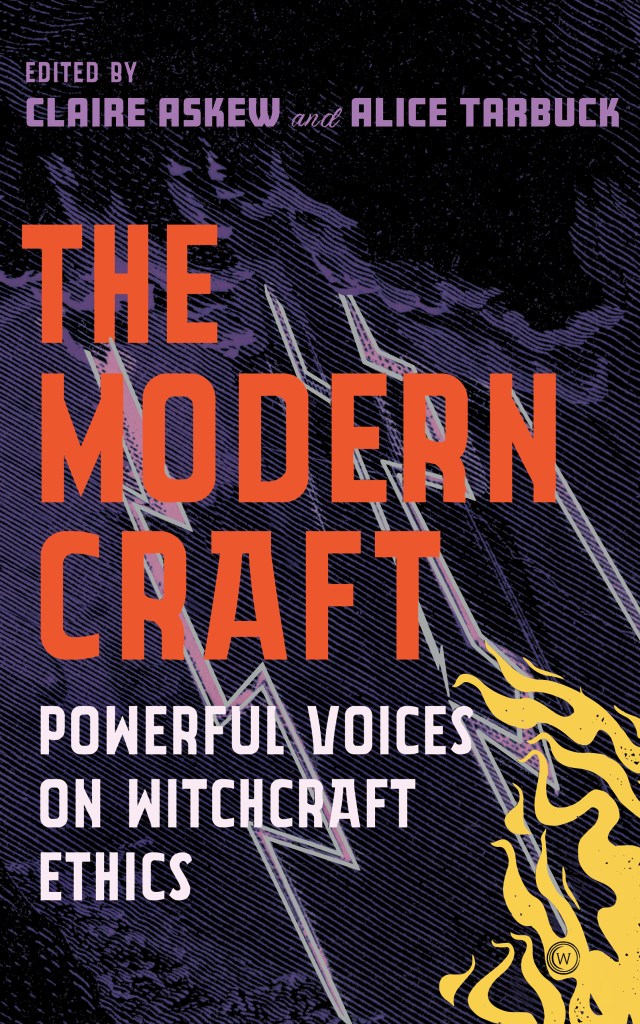
                    The Celebrate the release of the launch of ‘The Modern Craft’ Edited by Claire Askew & Alice Tarbuck we have partnered with Watkins Publishing to offer 3 lucky Digital Coven followers one of their ‘The Modern Craft’ Book Lunch Bundles.

                    How To Enter:

                    The bundles include a copy of the book which is released 14th June 2022. To enter please leave your details below (Don’t worry we won’t use them for anything else) to enter the prize draw. To get a futher entry please visit our instagram to take part in our Instagram giveaway.

                    Entry Form: https://forms.gle/XwkZNFvFGzNFzHED8

                    Two books are on offer in a prize draw so Just fill out this form to enter. You can get a second entry into the competition by following digital coven over on Instgram and commenting on this post what The Modern Craft means to you.

                    Closing Date for Entries is 30th June 2022

                    About ‘The Modern Craft’

                    Edited Claire Askew & Alice Tarbuck

                    Launch: 14TH JUNE 2022
                    Price: £12.99 / $16.95
                    9781786786449

                    Amazon Link (Digital Coven Affiliate) https://amzn.to/3HrrqJC

                    Amazon Non Affiliate: Amazon

                    An eclectic and radical collection of essays on witchcraft practice and the ethics of magic, The Modern Craft gives that much-needed modern context to timeless wisdom. It offers a fascinating snapshot of Powerful voices on witchcraft ethics and contemporary occult practice viewed through an intersectional lens.

                    Touching on a number of timely conversations, essay topics include:

                    • the ethics of decolonization
                    • meditations on what it means to honour
                    • Mother Earth during the Anthropocene
                    • the reclamation of agency for workingclass & queer witches through spellwork
                    • a gender-fluid perspective on breaking
                    • down hierarchies in magical symbolism
                    • a day in the life of a disabled Pagan
                    • Irish practitioner


                    The book features contributions from Claire Askew, Lisa Marie, Basile, Stella Hervey Birrell, Jane Claire Bradley, Madelyn Burnhope, Lilith Dorsey, AW Earl, Harry Josephine Giles, Simone Kotva, Iona Lee,
                    Briana Pegado, Megan Rudden, Sabrina Scott, Em Still and Alice Tarbuck.

                    Offering inspiring glimpses from the brink of the contemporary Craft, these essays show how anyone, no matter who they are, can find positivity and the force for change in the subversive unknown.


                    With courage, conviction, and a
                    fierce love and respect for the
                    craft, this fiery collection is poised
                    to spark vital conversations and
                    radical change in the world of
                    witchcraft and beyond.

                    Kristen J. Sollée, author of Witches, Sluts, Feminists and
                    Witch Hunt

                    We’ve also got a few more oher suprises for this launch, so what this space Coven!

                    If you wish to be featured in our #WitchyType Book Club email list please use our sign up form here

                    You can also continue the coversation over on our social channels as wel love to hear from you:

                    Tiktok

                    Instagram 

                    Until next time, Stay dazzling!

                    Love,

                    Witches At Work: Interview With Olivia aka Ostara

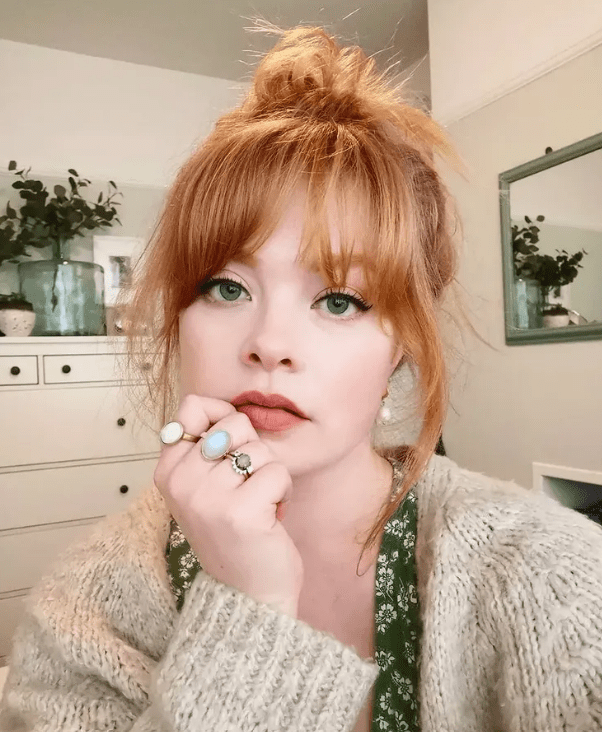
                    This weeks #WitchesAtWork interview is the Olivia, the owner of Ostara.

                    We are super excited to speak to one of our favourite social media and #WitchesAtWork to follow, The Fabulous Oliva AKA Ostara. Soooo many questions and we highly recommend you spend a few moments deep diving into her fantastic tiktok viral (and national media coverage earning) introduction to whimsigothic videos and, saving the best for last…the beautiful products on the newly launched Ostara Shoppe site. Ahhh so fabulous! Anyway, let’s jump in….

                    First, tell us about yourself!

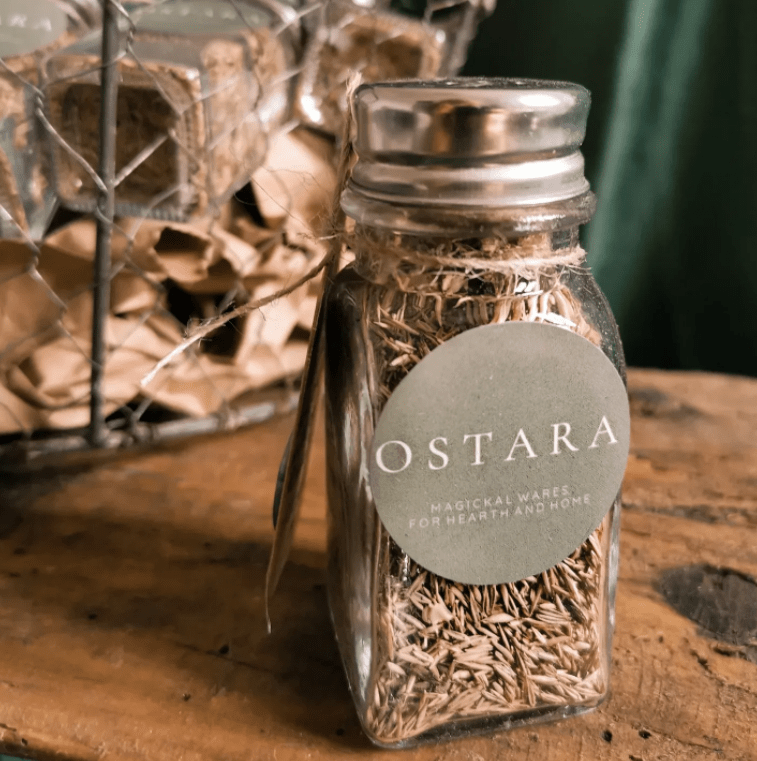
                    My name’s Olivia, and I own Ostara, which stocks magickal wares for your hearth and home. I’m a Taurus Sun, Capricorn Moon and Virgo Rising, so an earthy homeware shop is perfect for me! I believe your home should be a solace, a special space in place and time where once you step over the threshold, you can be at peace. Creating a safe, comforting environment is an art, and I want to help my customers achieve this through carefully selected heirloom pieces.

                    And now what you do and your career journey up until now

                    I’m from the North, and moved all around the country from the age of 21 working in Film and TV. I then settled in London, where I continued to art direct and design sets for high end shows, films, and commercials. During the pandemic, my husband and I decided to pursue a slower life by the sea, and moved to Kent to renovate an old Edwardian house. I then decided this was the perfect time and place to leave the film industry and follow my dreams to open Ostara! Seeing so much waste and consumption in the film industry left a bitter taste in my mouth. I wanted to slowly, carefully, handpick items for my shop, choosing heirlooms for peoples homes that have a deeper meaning and symbology to each piece.

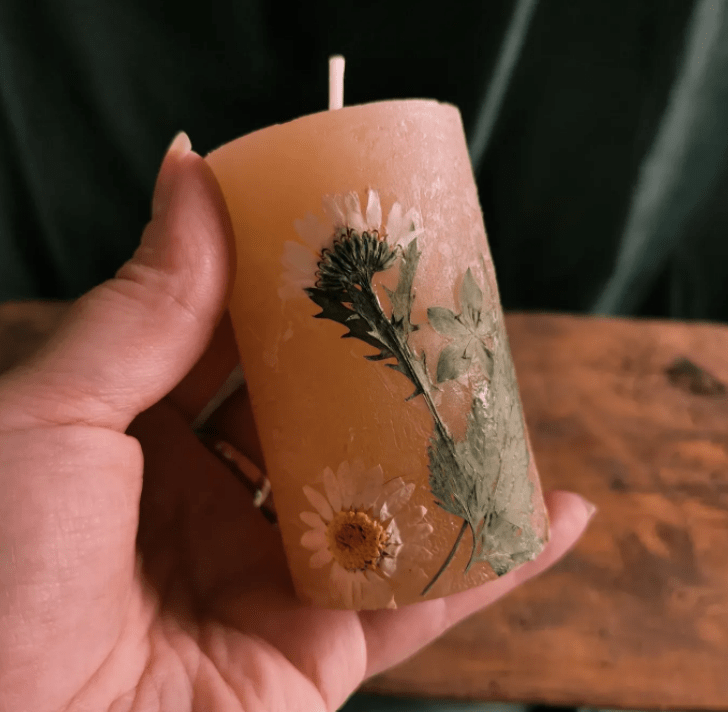
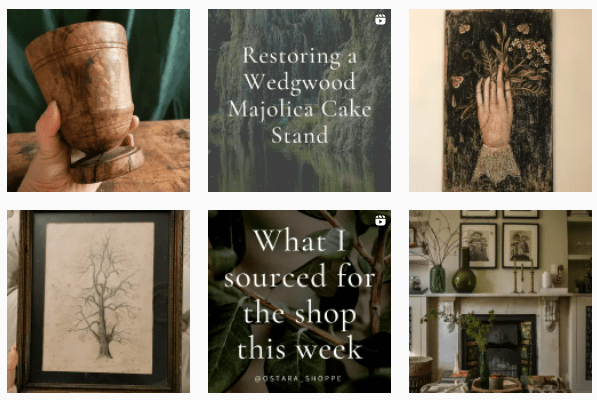
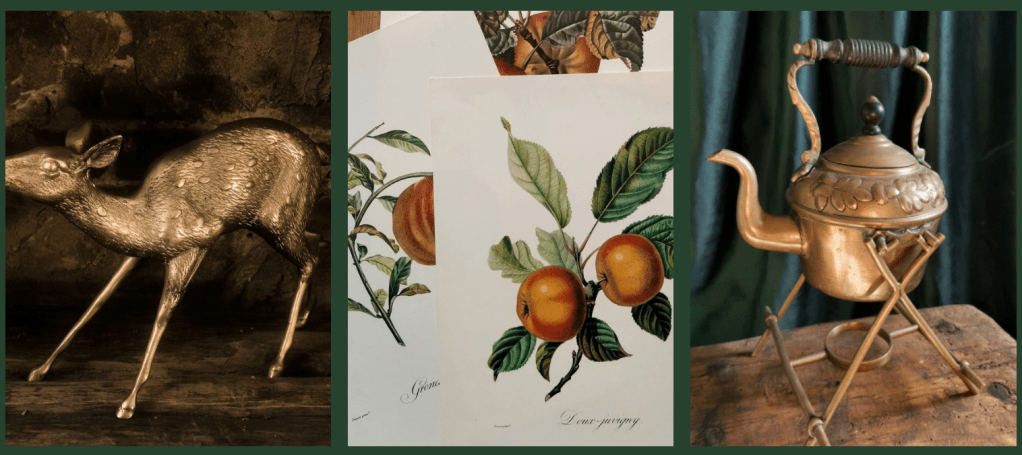
                    Items From the ostarashoppe.com

                    What is witchcraft to you?

                    Witchcraft to me is simply stepping into your power as a human being. Trying to see and feel the beauty and miracle of nature, trying to live a deeply embodied life. Connecting with ancestors is very important to me, and understanding where you came from, and the environment around your ancestors – what shaped your blood line. Learning folklore, mythology and traditional stories can help you have a deeper understanding of human nature and I love learning from them.

                    I also deeply believe in being of service to whatever greater good you believe in. I’m a triple earth sign – so I passionately care about Mother Nature! My shop Ostara is part of that – I don’t want to contribute to the fast fashion, over consuming nature of interior decor trends. I want to save items from landfill, from going to scrap, and to breathe new life into them, so they can live a new life in someone’s home. Filling your life with knowledge and reverence doesn’t have to stay contained within your practice – it can be displayed in your home too.

                    How do you use witchcraft in your day to day life?

                    I suppose it has to do with my idea of being of service again. I am a total gardening geek, and I garden as an act of service to Danu, Gaia, Mother Nature. I plant food to honour my ancestors, and learn herb lore to keep the knowledge alive. I use tarot, the Wild Wood deck, and am constantly trying to learn as much as I can about astrology – there’s just so much to learn!

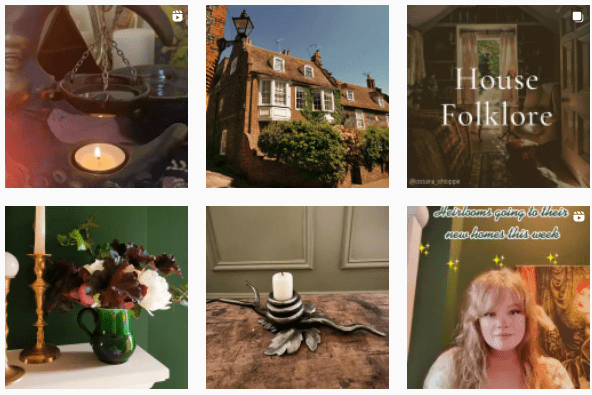
                    Image From Instagram: @ostara_shoppe

                    And professional life?

                    I only do ‘spells’ very very occasionally, and it’s usually a more direct, ritualistic way of connecting with my ancestors to receive wisdom and advice. These very occasional rituals are usually asking advice to do with my career, as this is the only area of major life choices where I struggle with decisions in my life! When it came to leaving the film industry (which was incredibly stressful and damaging to my health) I believe I was being shown signs to leave for a long time. When I directly asked, I got the answer I was waiting for – it just didn’t come in the way I was thinking! But I was still very grateful for the nudge in the right direction.

                    How have you used witchcraft to support in shaping your career?

                    When leaving Film, I had an idea of what I might like to move into, but just didn’t feel the confidence. Leaving a career of 10 years is hard! I knew what I loved doing, I knew I had a passion for interiors, but I didn’t know how to tie it all together. Using tarot was brilliant in shaping my decision to open a store.

                    Image feed of Instagram: @ostara_shoppe


                    Does your work know about your practice?

                    I think now they do! I want my store to be different in that it offers homeware or furniture that come with a deeper meaning behind each piece – whether that’s the traditional symbolism behind the wood that’s used to make the piece, or another bit of folklore attached to it. That’s why I spend so much of my time researching not only antiques and vintage homewares but mythology and folklore. I want my customers to know that they’re buying from not only a reputable source of ethically gathered antiques, but a genuine lover of magick and folklore.


                    How do colleagues/clients respond?

                    I’ve been overwhelmed with the response from my customers – I’ve had orders from all over  the UK, Europe and America! I hope that people enjoy the unique blend of quality vintage and magickal flare to each piece that I source.

                    There are a few exciting bits and pieces brewing for the future – one of which is establishing a bricks and mortar shop for Ostara to dwell in. I can’t wait to be able to let people see, touch and hold their items before they buy. And who doesn’t love a good witchy shop?

                    Instagram feed : @ostara_shoppe

                    Where can people find you?

                    The store is found at www.ostarashoppe.com 

                    I’m on instagram as @ostara_shoppe 

                    And on Tik Tok as @Ostara_Shoppe

                    Ah thank you so much Olivia!

                    Let’s us know any qustions that you may have for Olivia in the comment below or via our channels, as we do love chatting with you!

                    Until Next time!

                    Witchcraft Around The World: 30th April -Walpurgis Night

                    Witchcraft Around The World: The fabulous Tanja, shares her insight into Walpurgis Night.

                    We love learning about all different type of Witchcraft here at Digital Coven and today we have the fabulous Tanja, sharing her insight into Walpurgis Night.

                    Take it away, Tanja!

                    Greetings fellow witches! You may or may not be prepping to celebrate Beltane this weekend, so I thought I would make you familiar with what I like to call its “German goth counterpart”, – Walpurgisnacht, or the Night of the Witches, which takes place on the night of the 30th of April.

                    About Beltane

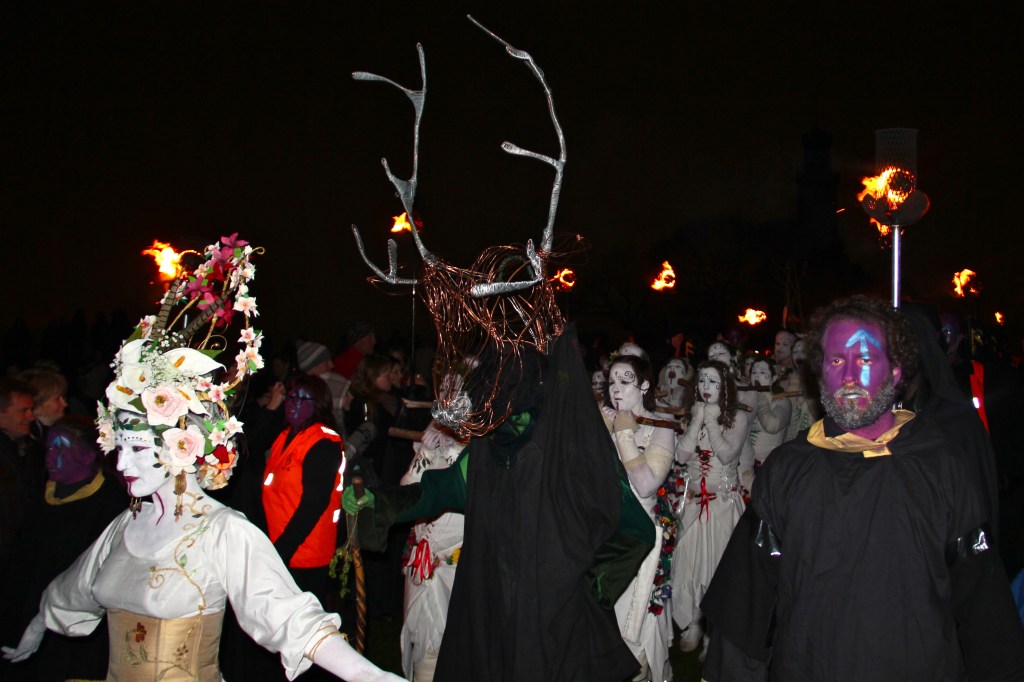
                    As you may know, Beltane is the pagan festival held halfway between the spring and summer equinox, celebrating the blossoming of trees and flowers and the days getting warmer. It takes place between 30th of April and 1st of May and therefore traditionally includes May Day celebrations which span across many different cultures – Celtic, German, Hawaiian and Greek, to name a few. They include dancing around a May Pole, making flower crowns and crowning a May queen (not to be confused with the customs of Midsommar – neither the Swedish festival nor Ari Aster’s horror masterpiece).

                    The Fire Festival

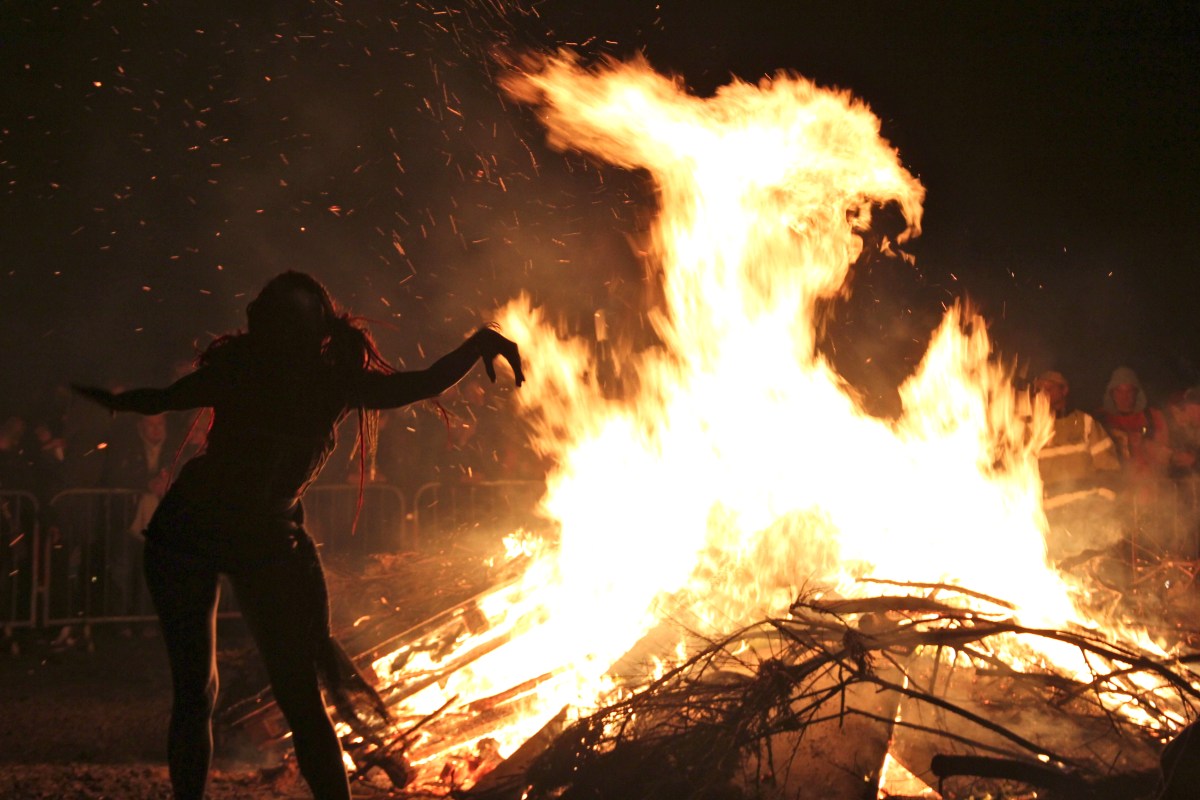
                    Beltane, from the Gaelic Bealtaine, can be roughly translated to “bright fire”. On the eve of May 1st, Pagans would gather to light bonfires and dance around them – since fire typically stands for purification and new beginnings, this ties in with Beltane’s themes of renewal and summer returning. 

                    Like on Halloween (Samheim) and Midsummer, the veil between the realms of the living, dead and spirits is supposed to be especially thin this time of year. It is therefore no wonder the night became associated with witchcraft, its literal Dutch translation being “Heksennacht”, the night of the witches, which in German folklore became associated with a night where evil witches gather to plan their mischievous schemes.

                    The History of Walpurgis Night

                    For this negative association, we can thank the Catholic Church – as pagan beliefs did not fit in with the Christian religious ideals, during the Middle Ages they attempted to stamp out any other religion’s customs, including those of Beltane, throughout Europe. Walpurgisnacht i.e. “Walpurgis Night” derives its name from the Catholic missionary turned Saint Walpurga, who was celebrated for succeeding at putting an end to “pagan sorcery”

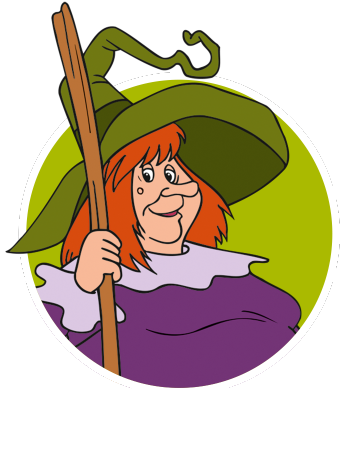
                    Ironically, the image I associated with Walpurga until researching this date stems from a popular German children’s cartoon about a teenage witch – In this, she is the leader of the coven and looks like this:

                    As someone who grew up Catholic, that doesn’t look very pious to me, which goes to show that Walpurga today is associated way more with witches than she would have liked. Sorry, gal!
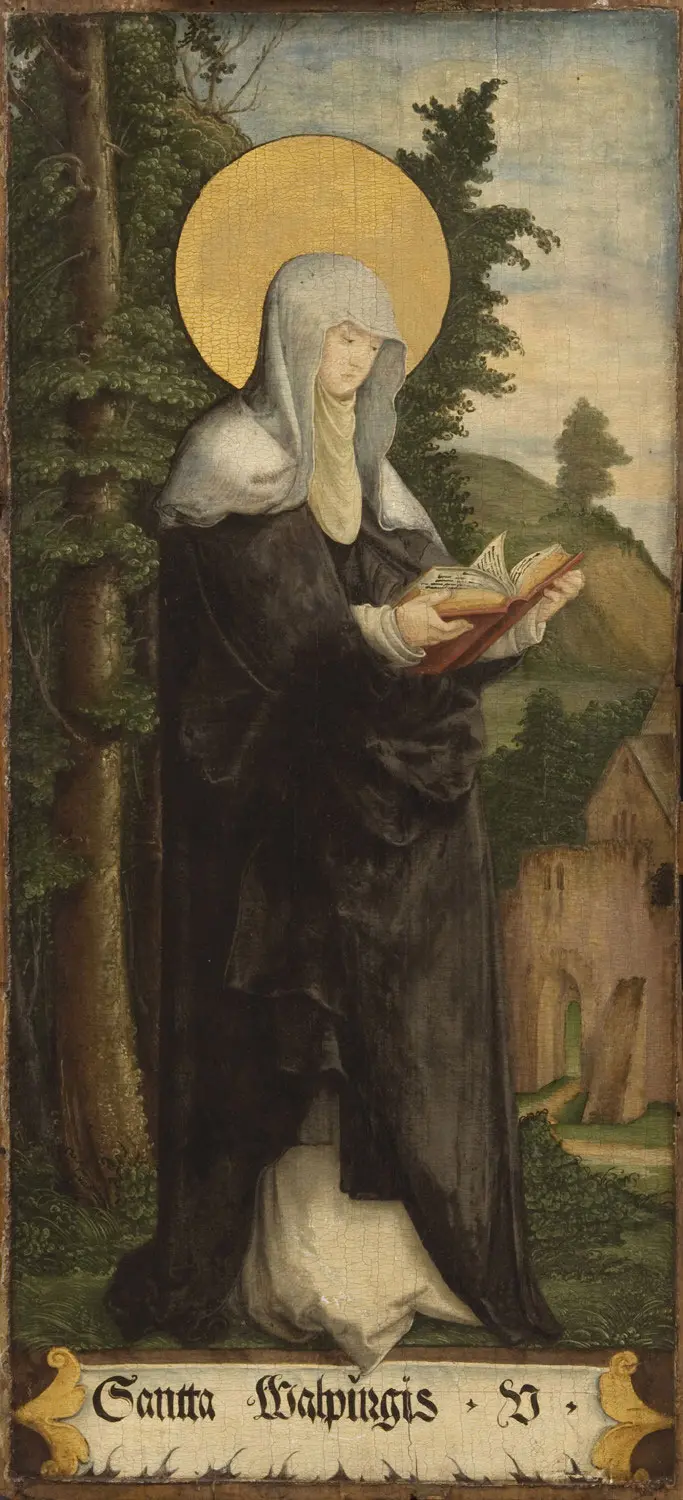

                    To give her credit, Walpurga actually did see to it that the pagan rituals didn’t completely die out: She was canonised on the 1st of May, and therefore, likely by accident, Christian and Pagan customs became entwined. Pagans could continue their celebrations without fear of being condemned, by doing it under the guise of honouring Saint Walpurga (article). 

                    So, these practices could be continued quite freely in Medieval Germany, until the 16th century, which saw a massive hysteria about witchcraft followed by one of the most gruesome and bloody witch hunts in history taking place in Germany.

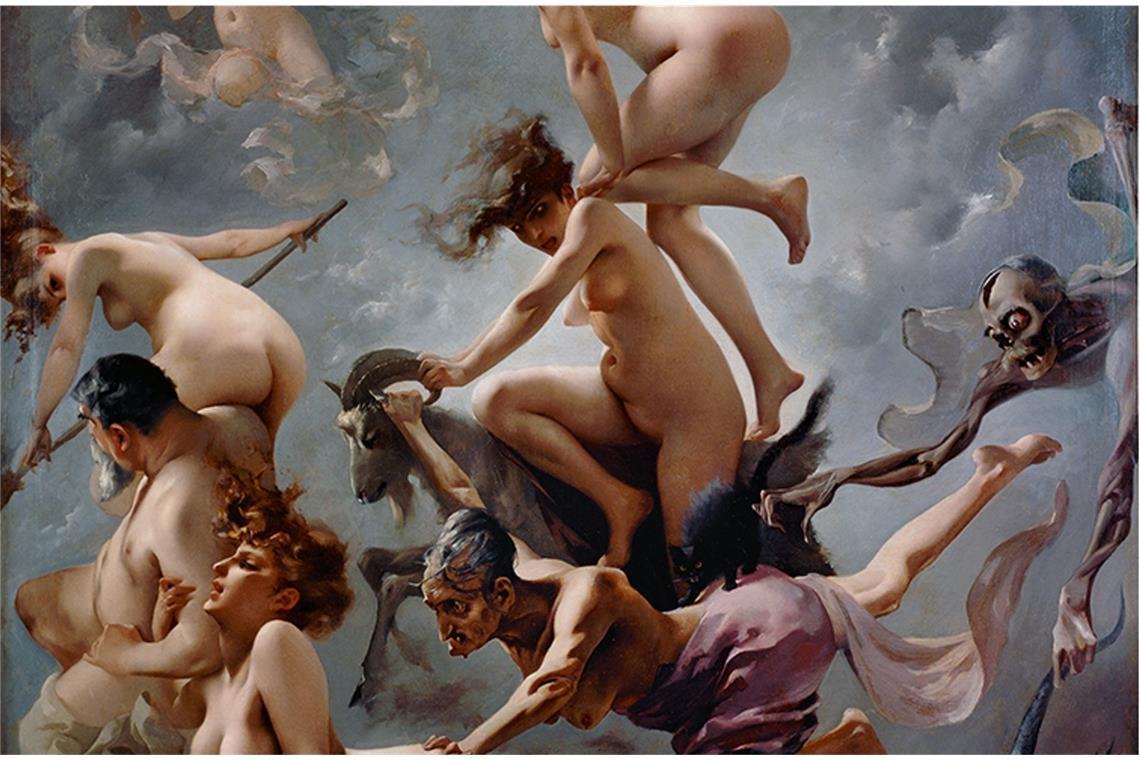
                    During that time, hysteria led people to believe that witches would gather on Mount Brocken, the highest peak in Germany’s Harz Mountains, to have orgies, dance, and meet with Satan to discuss how they could bring the most mischief and evil to the coming year (no, really).

                    Ein Bild, das Text, Zeichnung enthält.

Automatisch generierte Beschreibung
                    The actual Saint Walpurga


                    According to some legends, witches would gather in the valley and then ride up to the mountain’s peak – not just on broomsticks, but even on cats or goats!

                    In an attempt to protect themselves from evil spirits and witches, locals would gather on April 30th to light bonfires, burn straw men and make loud noises to chase away evil. The joyous pagan rituals for fertility and summer returning therefore morphed into a gathering driven by fear. Well done, Catholic Church!

                    Luckily, those superstitions began to gradually die out and Walpurgis Night celebrations carried on but became more light-hearted, as people would gather around the fire, celebrate, and sing folk songs. The festival might not still be part of the German Zeitgeist today had it not been for Goethe’s famous poem Faust, published in the 19th century, which sees the protagonist travelling to Mount Brocken and taking part in the witches’ celebrations.

                    This poem, loathed by German highschoolers throughout the country, re-popularised Walpurgisnacht and is likely to thank for why it is still popular today.

                    Modern Day celebrations

                    Today, Walpurgisnacht remains part of German popular culture, with many other stories about the Witches’ mountain gatherings having sprung up in the century following Goethe’s Faust.

                    As for the celebrations, most that remains of them is the lighting of and gathering around bonfires, although this is now being celebrated under the new motto of Tanz in den Mai – “Dance into May”. Turns out, pagans, legendary witches and normal human beings alike love a bit of revelry and dancing around a fire! Due to the first of May being a bank holiday, Labour Day, people still traditionally like to go dancing at clubs which do “Tanz in den Mai” themed nights. I have taken part in many of these club nights and regardless of alcohol levels, the night has always felt special to me. Maybe there is something to the veil between the worlds being more permeable. Or maybe I just feel very seen as a witch on this holiday which is, in a way, dedicated to us. 

                    Thanks, Tanja!

                    You can stay in touch with Tanja and find her shitposting and creating other digital content about drag, queer and witchy stuff on Instagram @tanjaktx and Tiktok @tanjatix

                    If you wish to write an article for Digital Coven please get in touch on our contact page or just pop an email over to us on digitalcovenuk@gmail.com or you can always reach out via our social channels:

                    Tiktok

                    Instagram 

                    Until next time,

                    Love,

                    Featured Image: “File:Edinburgh Beltane Fire Festival 2012 – Bonfire.JPG” by Stefan Schäfer, Lich is marked with CC BY-SA 3.0.